

Ecowitt vs Ambient Weather Stations: Which System Fits Your Setup?
This comparison is Ecowitt WS90 outdoor sensor + a compatible Ecowitt gateway path versus the Ambient Weather WS-5000 complete station — not every Ecowitt or Ambient model. Focus on what you buy, setup, connectivity, expansion, and display experience, based on manufacturer documentation and product architecture — not lab testing.

Affiliate disclosure:As an Amazon Associate I earn from qualifying purchases. Editorial content is based on documented specifications and compatibility — not sponsored reviews.
Choose Ecowitt WS90 + a compatible gateway when you want modular expansion, gateway flexibility (including Ethernet on GW2000/GW3000-class hubs), and room to add sensors later. Choose Ambient WS-5000 when you want a more conventional complete station package with an included console, separated outdoor sensors, and a Wi-Fi cloud/app workflow. There is no universal winner — the better fit depends on modular vs console-first priorities.
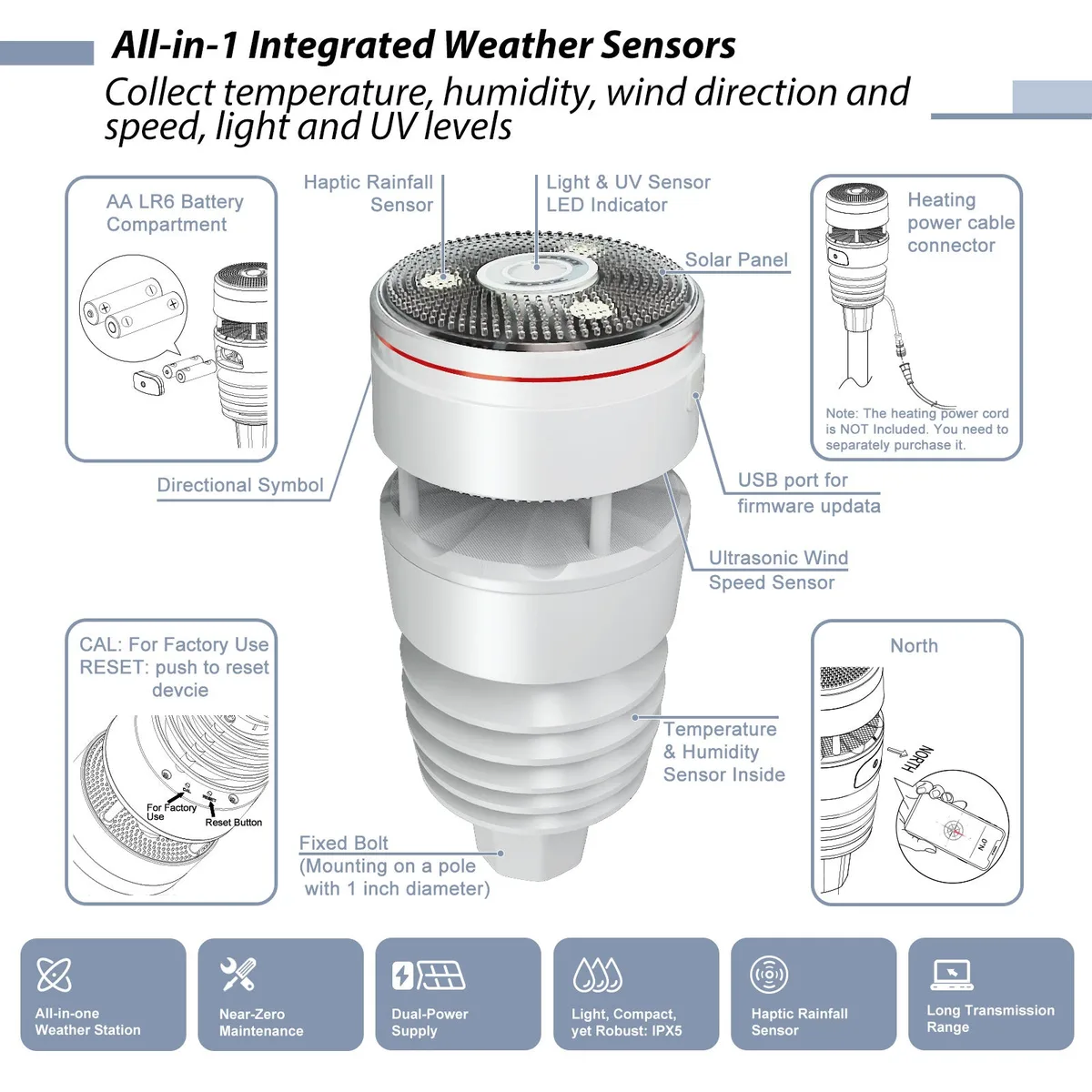
Ecowitt WS90 7-in-1 Outdoor Sensor
The Ecowitt WS90 is a solid-state outdoor weather sensor that measures temperature, humidity, wind speed and direction, rainfall, UV, and light (solar intensity). It has no moving wind cups and uses a haptic/piezoelectric rain sensor instead of a tipping-bucket gauge. The WS90 cannot work alone — it must pair with a compatible Ecowitt gateway or console for display, Wi-Fi/Ethernet, app access, and smart-home use. If you already own an Ecowitt gateway, buy the sensor-only listing; if you are starting from scratch, the GW2001 bundle includes the WS90 plus a GW2000 gateway.
Ambient Weather WS-5000 Ultrasonic Pro
The Ambient Weather WS-5000 is a premium home weather station built around separate outdoor sensors, including an ultrasonic wind sensor, dedicated rain gauge, and temperature/humidity sensor. It includes a color TFT console and connects to AmbientWeather.net for remote monitoring. Its separated sensor design gives buyers more flexibility in where each measurement is installed compared with all-in-one weather stations.
Side-by-side differences
Factual comparison from documented specifications — not independent testing.
What you buy and how setup differs
On the Ecowitt side, the outdoor piece in this comparison is the WS90 sensor. It is not a complete station by itself: you pair it with a compatible gateway path such as a GW2000-class hub (Wi-Fi + Ethernet; the GW2001 listing is typically GW2000 + WS90, not gateway-only) or a GW3000 (gateway-only Wi-Fi + Ethernet with microSD; sensors sold separately). Ambient WS-5000 ships as a complete package with separated outdoor sensors and an included TFT console on Wi-Fi. Check current Amazon or manufacturer listings for exact bundle contents — do not treat a WS90 sensor-only price as the full Ecowitt system cost. Use the product cards above for WS90 and WS-5000 specs; gateway details live on the Ecowitt GW2000 (GW2001 bundle) and GW3000 product pages.
Modular parts list: choose gateway capacity and add sensors over time without replacing the whole outdoor array.
One conventional station purchase with console included and outdoor sensors designed to mount separately.
Connectivity, expansion, and display
Ethernet matters only if you place a hub on wired LAN: Ecowitt buyers get that option through compatible gateways, not through the WS90. Ambient’s standard WS-5000 console is Wi-Fi. Expansion favors Ecowitt’s modular catalog when you expect soil moisture or other add-ons later (WH51 remains an accessory that needs a compatible gateway — it is not a direct network or Home Assistant device alone). Display favors Ambient’s included console; Ecowitt display options exist but depend on what console, app, or dashboard you add after the gateway.
Gateway flexibility for Ethernet, local network workflows, and future sensor expansion.
Integrated console experience and separated-sensor siting without assembling a gateway stack.
Local data and Home Assistant (secondary)
After the hardware decision, local automation paths diverge. Compatible Ecowitt gateways support documented local network integrations and Home Assistant-compatible workflows where published. Ambient often centers on AmbientWeather.net, with Custom Server / community options for local push on supported firmware — plan that path explicitly if cloud dependency is a concern. Home Assistant is a meaningful differentiator for some buyers, but it should not override whether you want modular gateway hardware vs a console-first station. For broader integration workflows, use the Smart Weather hub; for other head-to-heads, return to Comparisons.
Documented local network paths through compatible gateways for self-hosted automations.
Console remains useful for live viewing even when you are not building a local automation stack.
Who Should Buy Ecowitt WS90
- •Buyers who want modular expansion and expect to add sensors later
- •Anyone who needs Ethernet at the hub via a compatible Ecowitt gateway
- •Users who prefer flexibility in gateway choice and local-data workflows
- •Garden or multi-sensor setups comparing Ecowitt accessories such as WH51 (accessory + gateway required)
Who Should Buy Ambient Weather
- •Buyers who want a more conventional complete station package
- •Anyone who prefers the included Ambient TFT console experience
- •Users who want separated outdoor sensors with a Wi-Fi cloud/app workflow
- •Homeowners who do not want to assemble a separate gateway + outdoor sensor stack
Final Recommendation
Choose Ecowitt if you prioritize modular expansion, gateway flexibility (including Ethernet on compatible hubs), and room to grow the sensor set. Choose Ambient WS-5000 if you prioritize an integrated console-based station experience with separated outdoor sensors and a Wi-Fi cloud/app workflow. If you are also weighing an app-first all-in-one with built-in lightning, see Tempest vs Ambient WS-5000. Both Ecowitt and Ambient can be strong choices; the better fit depends on whether you prioritize modular expansion and gateway flexibility or an integrated console-based station experience.
Related product & hub pages
Related Comparisons
Ecowitt WS90 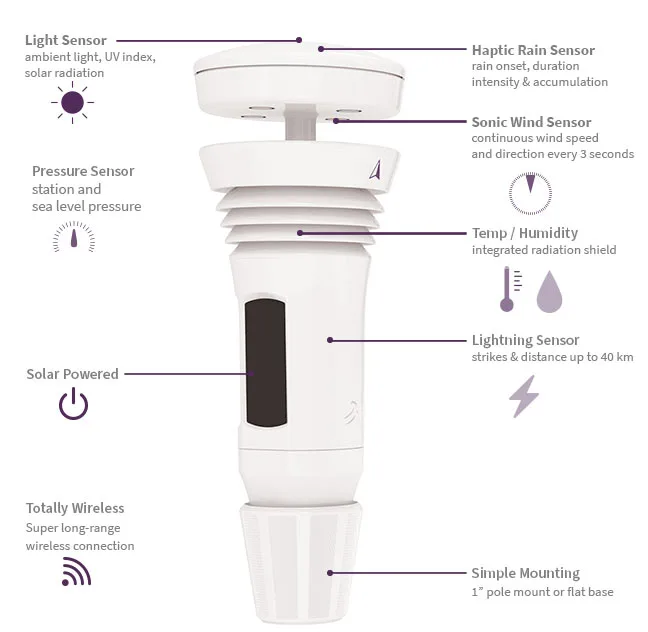 Tempest Weather
 Ecowitt WS90 vs Tempest: Modular Sensor + Gateway vs All-in-One System
Choose WS90 for modular expansion and gateway flexibility; choose Tempest for a simpler complete system with built-in lightning. There is no universal winner — the better fit depends on whether you want an expandable Ecowitt stack or a complete retail Tempest package.
 Ambient Weather Ambient Weather
 Ambient WS-2902 vs WS-5000: Budget All-in-One vs Premium Separated Sensors
Choose WS-2902 for lower cost and simpler setup; choose WS-5000 for separated sensors, ultrasonic wind, and more flexible siting. There is no universal winner — the better Ambient fit depends on whether you want a simpler entry station or a premium separated-sensor package.
Tempest Weather Ambient Weather Tempest vs Ambient WS-5000: Which Weather Station Fits Your Setup?
Choose Tempest for a simpler app-first all-in-one system with built-in lightning and no physical display. Choose Ambient WS-5000 for a console-led station with separated outdoor sensors and Ambient ecosystem expansion paths. There is no universal winner — the better fit depends on app-first simplicity versus console display and expandable Ambient accessories.
Tempest Weather 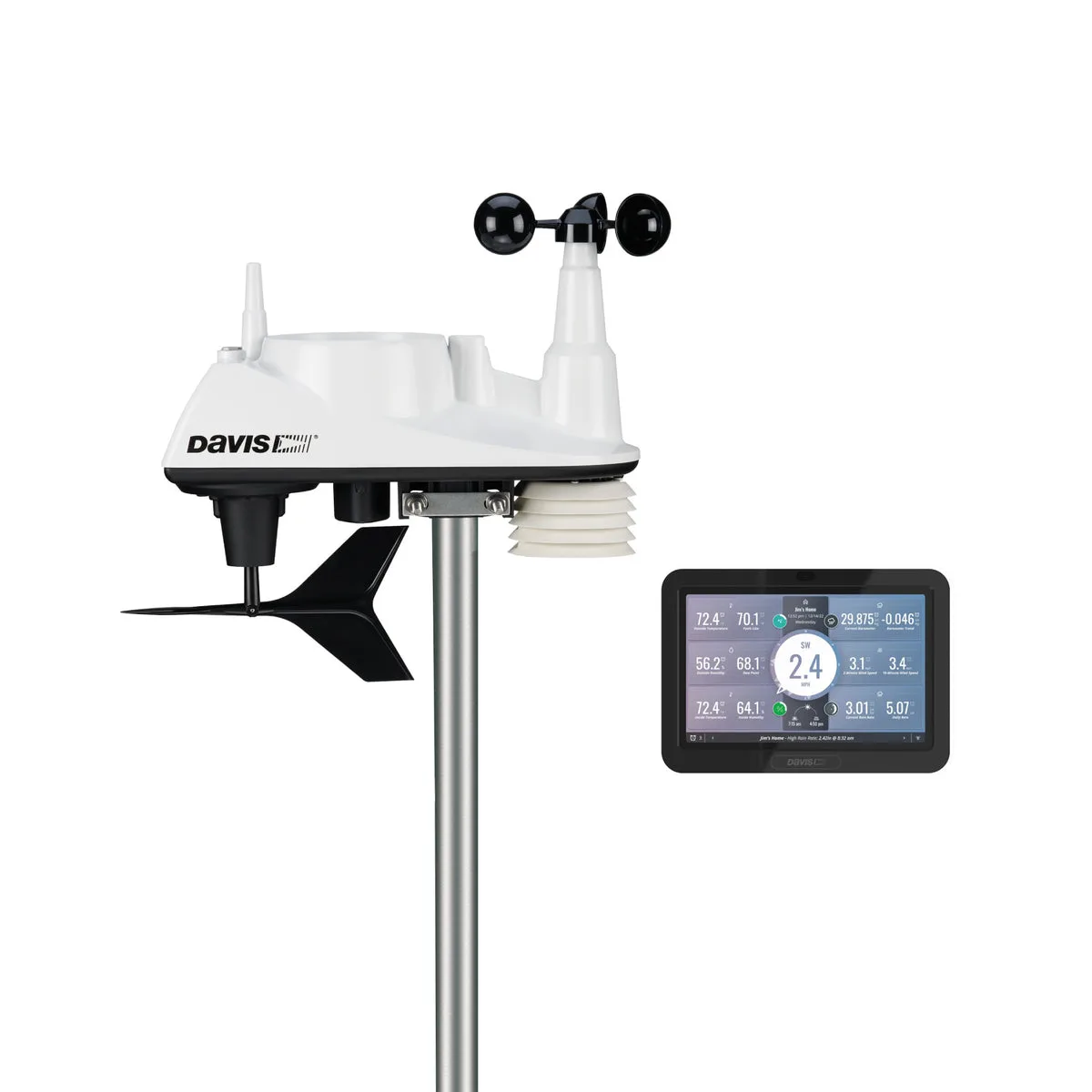 Davis Instruments
 Tempest vs Davis Vantage Vue: App-First Station or Research-Grade Console?
Choose Tempest for an app-first smart all-in-one with built-in lightning and an included Wi-Fi Hub. Choose Davis Vantage Vue 6242 for a more traditional/pro-grade integrated sensor suite with a WeatherLink Console path. There is no universal winner — and Atmosiva does not claim independent lab accuracy testing for either system.
Ecowitt WS90 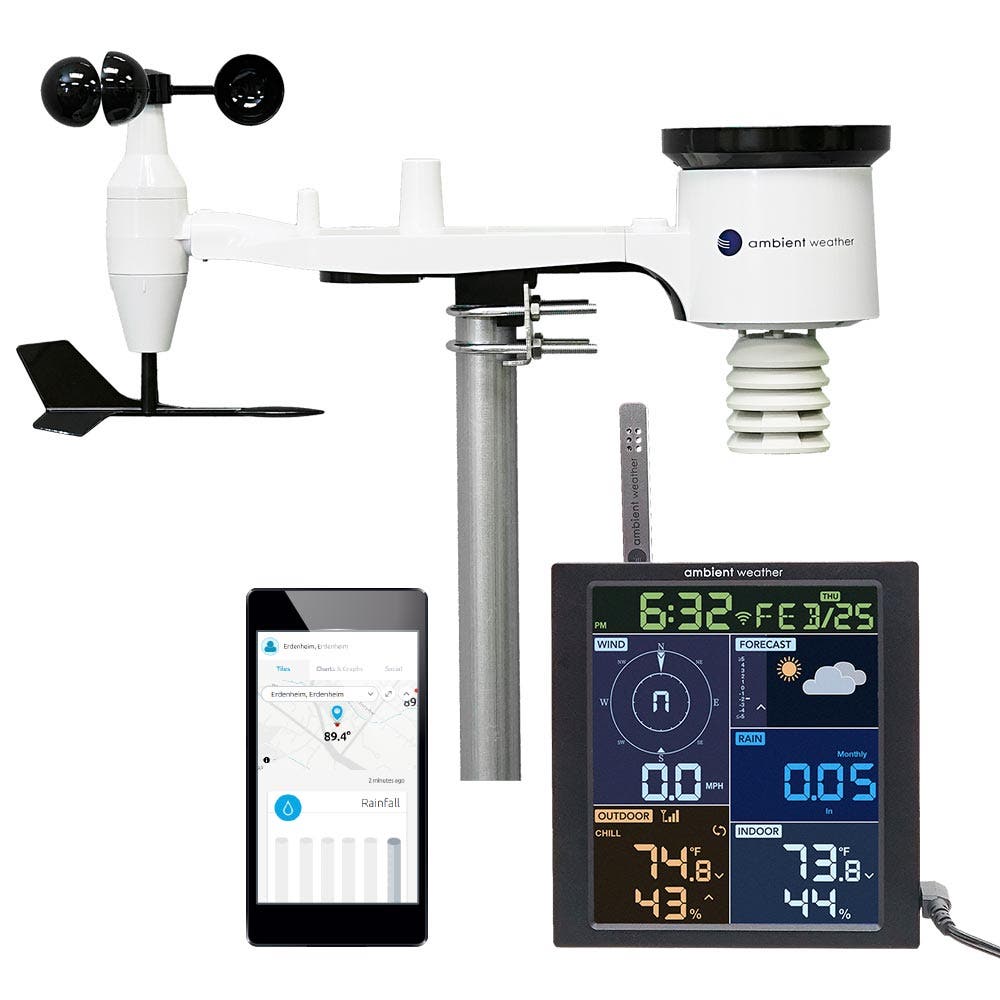 Ambient Weather
 Ecowitt WS90 + Gateway vs Ambient WS-1965: Which Home Assistant Weather Setup Fits?
For a Home Assistant buyer, Ecowitt WS90 plus a compatible gateway is the better fit when you want to choose the gateway and use a documented local-data path. Ambient WS-1965 is the better fit when you want one packaged station with a color console and Ambient Weather Network, and you do not need a documented Home Assistant or local-data path. Basic outdoor readings can come from either setup. There is no universal winner.
Ecowitt WS90 + Gateway Ambient WS-1965 Ecowitt WS90 vs Ambient WS-1965: Sensor + Gateway Setup or Console Station?
Compare the Ecowitt WS90 sensor plus a compatible gateway path against the packaged Ambient WS-1965 console station for Home Assistant fit, local-data options, expansion sensors, and setup simplicity.