

Ambient WS-2902 vs WS-5000: Budget All-in-One vs Premium Separated Sensors
Should you buy the Ambient WS-2902 or step up to the WS-5000? This page compares Ambient’s lower-cost all-in-one Osprey array against the premium separated-sensor WS-5000 architecture — based on manufacturer documentation and published specs, not lab testing.

Affiliate disclosure:As an Amazon Associate I earn from qualifying purchases. Editorial content is based on documented specifications and compatibility — not sponsored reviews.
Choose WS-2902 for lower cost and simpler setup; choose WS-5000 for separated sensors, ultrasonic wind, and more flexible siting. There is no universal winner — the better Ambient fit depends on whether you want a simpler entry station or a premium separated-sensor package.
Ambient Weather WS-2902 (Osprey)
The Ambient Weather WS-2902 is an all-in-one home weather station with an outdoor Osprey sensor array and a color display. It measures temperature, humidity, wind speed and direction, rainfall, UV, and light, and connects to AmbientWeather.net for remote monitoring. It is a practical choice for buyers who want a complete weather station with a dedicated console without moving to a more expensive premium system.
Ambient Weather WS-5000 Ultrasonic Pro
The Ambient Weather WS-5000 is a premium home weather station built around separate outdoor sensors, including an ultrasonic wind sensor, dedicated rain gauge, and temperature/humidity sensor. It includes a color TFT console and connects to AmbientWeather.net for remote monitoring. Its separated sensor design gives buyers more flexibility in where each measurement is installed compared with all-in-one weather stations.
Side-by-side differences
Factual comparison from documented specifications — not independent testing.
All-in-one array vs separated sensors
The WS-2902 is a complete Ambient station built around a single outdoor Osprey array plus an included color console — practical when you want one mast and a simpler install. The WS-5000 is also a complete Ambient package, but outdoor wind, rain, and temperature/humidity units mount separately for more flexible siting at the cost of more components to place. That layout difference — not brand marketing — is the core step-up decision.
Best for simpler installation and a lower-cost entry into the Ambient ecosystem.
Best for flexible sensor placement when you can mount units in different optimal spots.
Mechanical cups vs ultrasonic wind
WS-2902 uses mechanical cups and a vane; WS-5000 uses an ultrasonic anemometer with no spinning cups. Published measurement ranges differ (WS-2902 0–100 mph; WS-5000 0–89 m/s per Ambient specs) and are measurement ranges only — not survival ratings. Ultrasonic design removes moving wind parts and can favor buyers who want that architecture and siting flexibility; it does not by itself prove greater durability in severe conditions. For high-wind buying context beyond this A vs B page, see the High Winds guide.
Familiar mechanical wind hardware on a simpler all-in-one array.
Ultrasonic wind with no cups to seize, paired with separated outdoor placement.
Console, connectivity, and value
Both stations include a console and use Wi-Fi-oriented AmbientWeather.net cloud/app monitoring. The WS-5000’s premium TFT console is a noticeable step up in display experience; neither standard console documents Ethernet. If local/server options appear in Ambient materials, treat Custom Server as a software/firmware path — not wired Ethernet hardware. Value: WS-2902 is the lower-cost entry Ambient station; WS-5000 costs more for separated sensors, ultrasonic wind, and the premium console — not merely “more sensors.” Check current price on each product page before deciding.
Best for value when Wi-Fi/cloud monitoring and an all-in-one array are enough.
Best for a premium Ambient setup when you want the TFT console and separated ultrasonic architecture.
Who Should Buy Ambient Weather
- •Buyers who want lower upfront cost in the Ambient ecosystem
- •Anyone who prefers a simpler all-in-one outdoor array and easier install
- •Users for whom Wi-Fi/cloud monitoring is enough
- •Buyers who do not need separated premium outdoor sensors
Who Should Buy Ambient Weather
- •Buyers who want separated outdoor sensors and more flexible siting
- •Anyone who specifically wants ultrasonic wind instead of mechanical cups
- •Users who want Ambient’s more premium TFT console experience
- •Properties that can practically mount wind, rain, and temp units in different locations
Final Recommendation
Choose WS-2902 if you want a simpler, lower-cost Ambient station with an all-in-one outdoor array and Wi-Fi/cloud monitoring. Choose WS-5000 if you are willing to pay more for separated sensors, ultrasonic wind, greater siting flexibility, and the premium TFT console. The WS-2902 is the better fit for buyers who want a simpler, lower-cost Ambient station. The WS-5000 is the better fit for buyers willing to pay more for separated sensors, ultrasonic wind, and greater siting flexibility.
Related product & hub pages
Related Comparisons
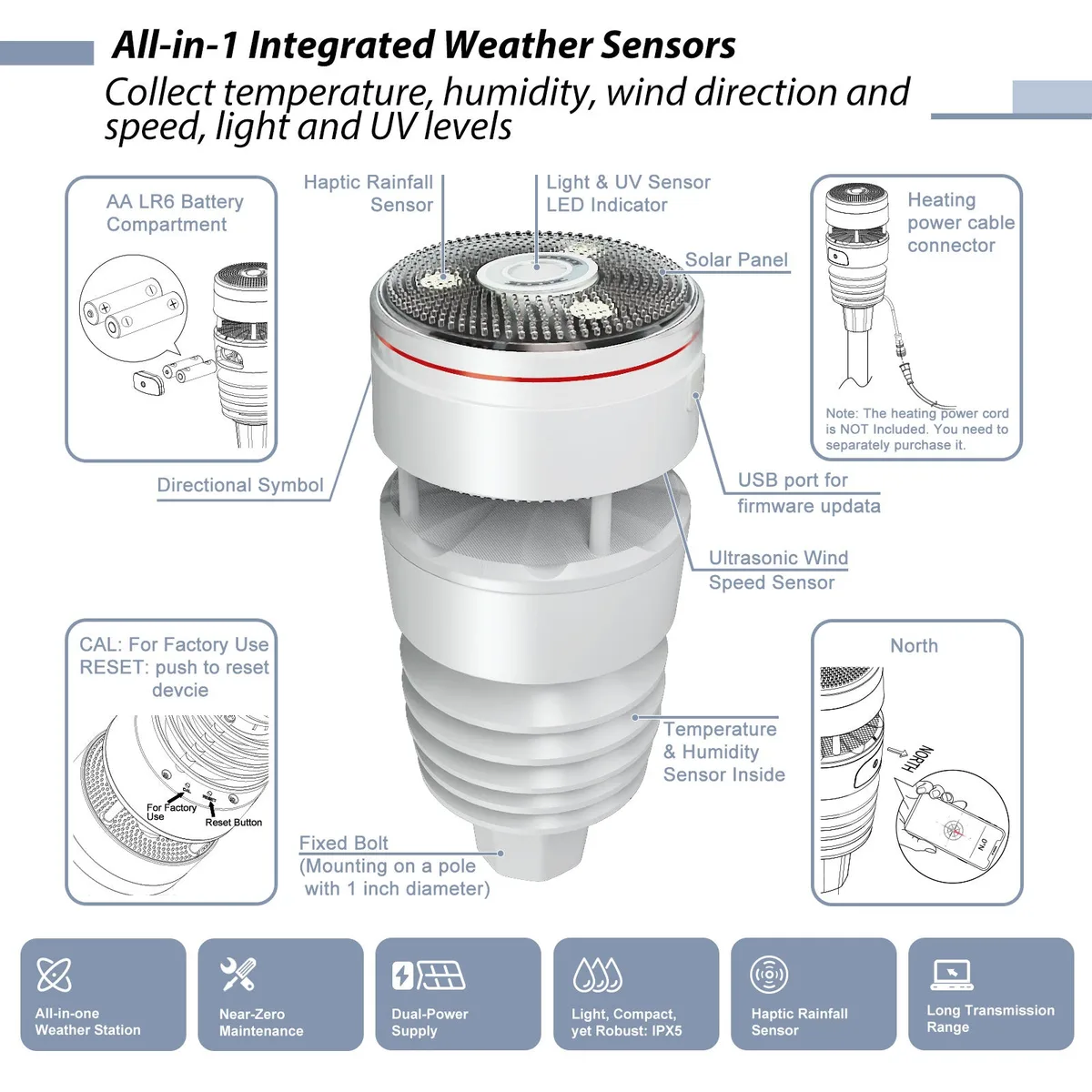 Ecowitt WS90 Ambient Weather
 Ecowitt vs Ambient Weather Stations: Which System Fits Your Setup?
Choose Ecowitt WS90 + a compatible gateway when you want modular expansion, gateway flexibility (including Ethernet on GW2000/GW3000-class hubs), and room to add sensors later. Choose Ambient WS-5000 when you want a more conventional complete station package with an included console, separated outdoor sensors, and a Wi-Fi cloud/app workflow. There is no universal winner — the better fit depends on modular vs console-first priorities.
Ecowitt WS90 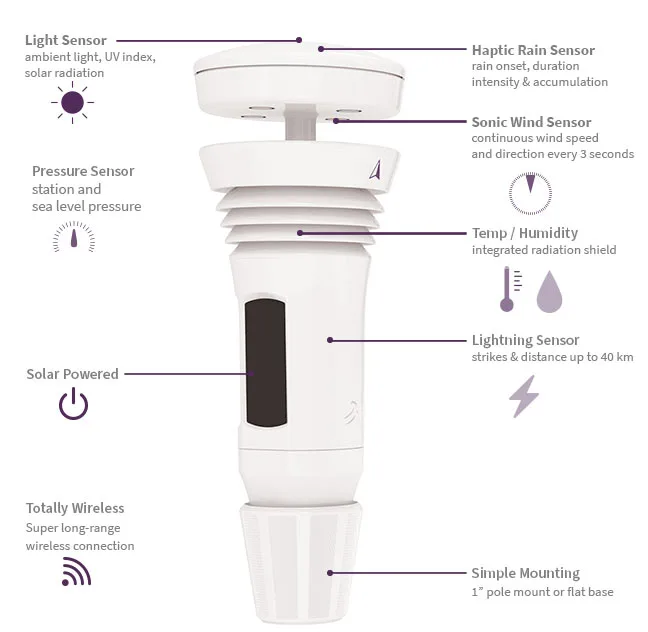 Tempest Weather
 Ecowitt WS90 vs Tempest: Modular Sensor + Gateway vs All-in-One System
Choose WS90 for modular expansion and gateway flexibility; choose Tempest for a simpler complete system with built-in lightning. There is no universal winner — the better fit depends on whether you want an expandable Ecowitt stack or a complete retail Tempest package.
Tempest Weather Ambient Weather Tempest vs Ambient WS-5000: Which Weather Station Fits Your Setup?
Choose Tempest for a simpler app-first all-in-one system with built-in lightning and no physical display. Choose Ambient WS-5000 for a console-led station with separated outdoor sensors and Ambient ecosystem expansion paths. There is no universal winner — the better fit depends on app-first simplicity versus console display and expandable Ambient accessories.
Tempest Weather 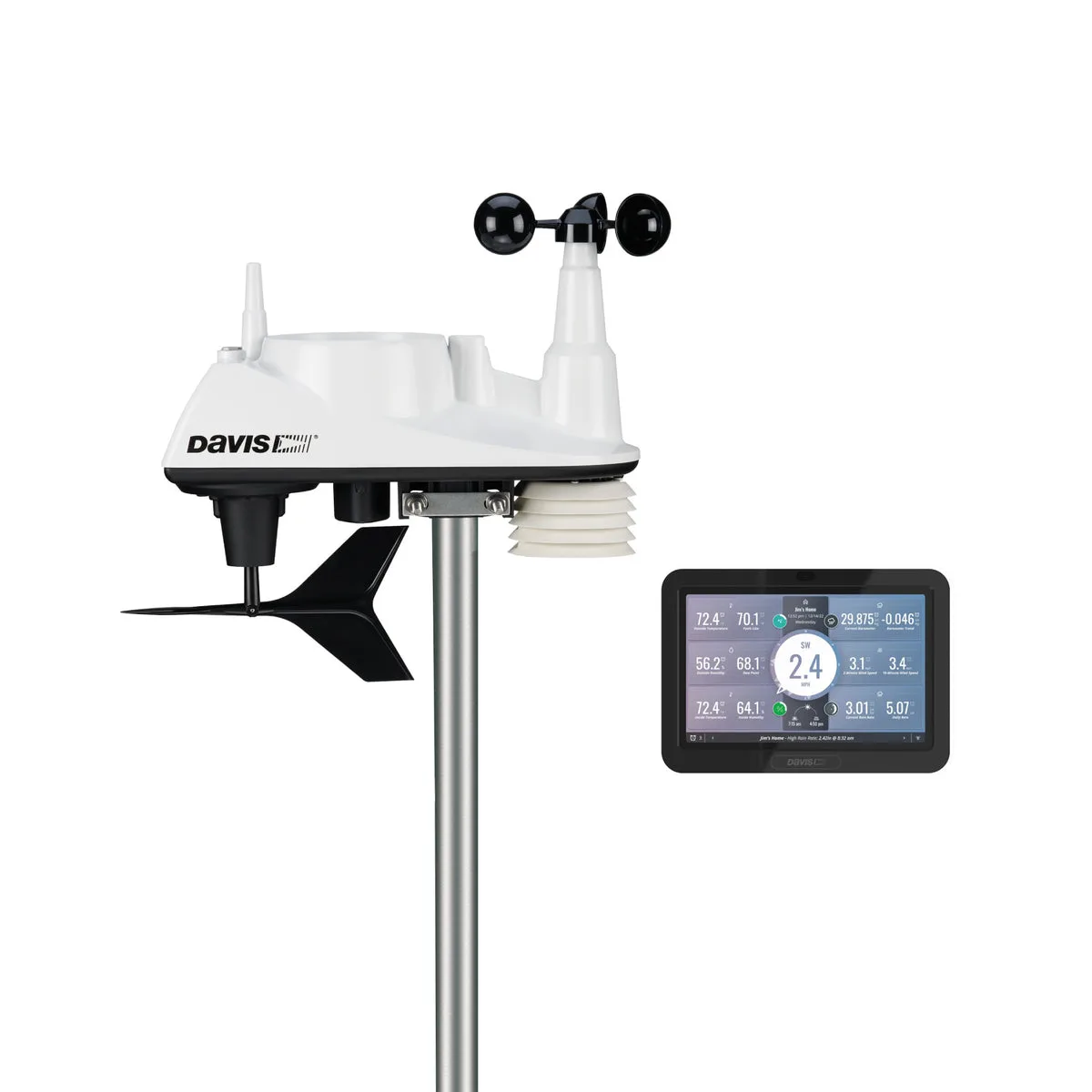 Davis Instruments
 Tempest vs Davis Vantage Vue: App-First Station or Research-Grade Console?
Choose Tempest for an app-first smart all-in-one with built-in lightning and an included Wi-Fi Hub. Choose Davis Vantage Vue 6242 for a more traditional/pro-grade integrated sensor suite with a WeatherLink Console path. There is no universal winner — and Atmosiva does not claim independent lab accuracy testing for either system.
Ecowitt WS90 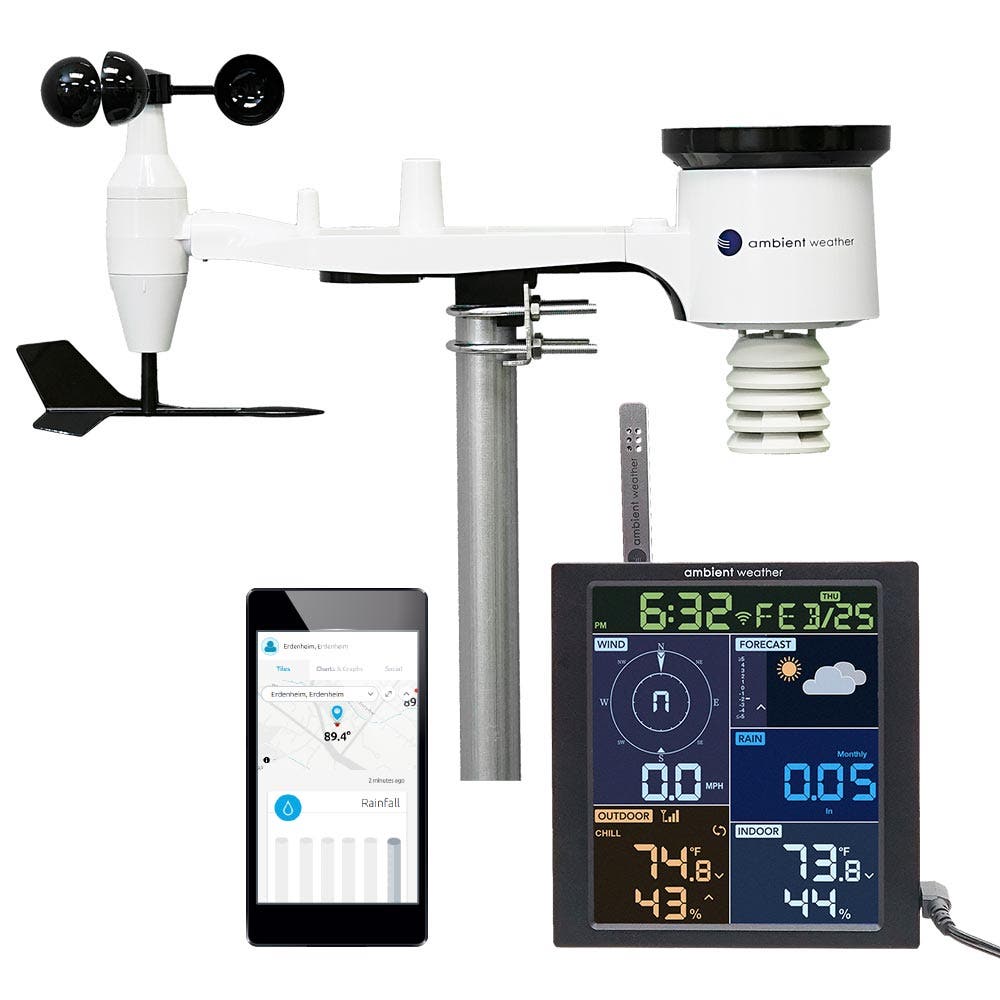 Ambient Weather
 Ecowitt WS90 + Gateway vs Ambient WS-1965: Which Home Assistant Weather Setup Fits?
For a Home Assistant buyer, Ecowitt WS90 plus a compatible gateway is the better fit when you want to choose the gateway and use a documented local-data path. Ambient WS-1965 is the better fit when you want one packaged station with a color console and Ambient Weather Network, and you do not need a documented Home Assistant or local-data path. Basic outdoor readings can come from either setup. There is no universal winner.
Ecowitt WS90 + Gateway Ambient WS-1965 Ecowitt WS90 vs Ambient WS-1965: Sensor + Gateway Setup or Console Station?
Compare the Ecowitt WS90 sensor plus a compatible gateway path against the packaged Ambient WS-1965 console station for Home Assistant fit, local-data options, expansion sensors, and setup simplicity.