

Tempest vs Ambient WS-5000: Which Weather Station Fits Your Setup?
This is an A vs B buying decision: Tempest’s all-in-one Wi-Fi Hub system versus Ambient’s WS-5000 console-led expandable station. Compare lightning, rain sensing, display, expansion, and local/cloud paths from documented manufacturer specs — not lab testing.

Affiliate disclosure:As an Amazon Associate I earn from qualifying purchases. Editorial content is based on documented specifications and compatibility — not sponsored reviews.
Choose Tempest for a simpler app-first all-in-one system with built-in lightning and no physical display. Choose Ambient WS-5000 for a console-led station with separated outdoor sensors and Ambient ecosystem expansion paths. There is no universal winner — the better fit depends on app-first simplicity versus console display and expandable Ambient accessories.
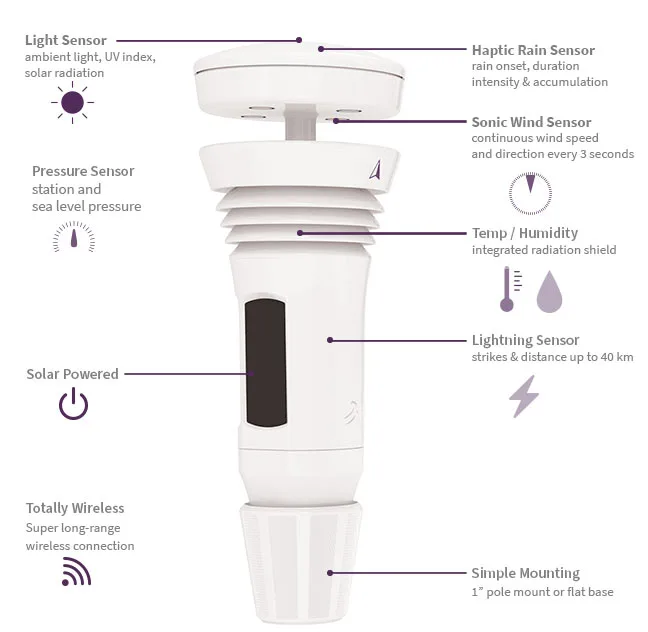
Tempest Weather System by WeatherFlow
The Tempest Weather System by WeatherFlow is a complete smart weather station that pairs an all-in-one outdoor sensor with an included Wi-Fi Hub. The outdoor unit measures temperature, humidity, wind speed and direction, rainfall, barometric pressure, solar radiation, ambient light, and UV, and it includes built-in lightning detection. Ultrasonic wind sensing and haptic rain mean there are no wind cups or tipping-bucket parts to maintain. You view conditions in the Tempest app and can connect the system to supported smart-home tools — without needing a separate physical display console.
Ambient Weather WS-5000 Ultrasonic Pro
The Ambient Weather WS-5000 is a premium home weather station built around separate outdoor sensors, including an ultrasonic wind sensor, dedicated rain gauge, and temperature/humidity sensor. It includes a color TFT console and connects to AmbientWeather.net for remote monitoring. Its separated sensor design gives buyers more flexibility in where each measurement is installed compared with all-in-one weather stations.
Side-by-side differences
Factual comparison from documented specifications — not independent testing.
Architecture: all-in-one Hub vs console-led Ambient
Tempest ships as a complete retail package: all-in-one outdoor sensor, Wi-Fi Hub, and mounting hardware, with app-first viewing and no physical display. Ambient WS-5000 is a console-led complete station: separated outdoor ultrasonic wind, dedicated rain, and temp/humidity sensors plus a TFT console. Tempest favors simpler outdoor placement; Ambient favors flexible sensor siting and always-on console viewing.
Fewer outdoor modules and a Hub-included package for typical home installs.
Console display plus separated sensors you can site independently.
Lightning, rain, and monitoring expectations
Tempest includes built-in lightning detection for proximity awareness — useful monitoring, not official emergency warning equipment. Stock WS-5000 does not include built-in lightning; Ambient ecosystem accessory paths (such as WH31L-class detectors for compatible Ambient consoles) are add-ons, not part of the base station claim here. Rain: Tempest uses haptic sensing (with optional cloud-assisted enhancement where relevant); Ambient uses a dedicated tipping funnel. Neither product should be treated as flood prediction or hurricane-proof gear.
Built-in lightning without buying a separate detector.
Dedicated rain gauge hardware and console-centric severe-weather viewing.
Connectivity, expansion, and local/cloud paths
Both rely on Wi-Fi for primary networking in the retail configurations Atmosiva documents — no Ethernet claim for the Tempest Hub or the standard WS-5000 console. Tempest documents local UDP/WebSocket consumers via the Hub. Ambient local data depends on Custom Server support and firmware — keep expectations to Local Data wording, not a guaranteed Local LAN badge. Expansion favors Ambient’s accessory ecosystem; Tempest stays a fixed outdoor suite with strong smart-home/app focus.
Documented local UDP/WebSocket paths with a simpler fixed outdoor suite.
Broader Ambient accessory expansion and console-first day-to-day viewing.
Who Should Buy Tempest Weather
- •Buyers who want an app-first all-in-one system with an included Wi-Fi Hub
- •Anyone who wants built-in lightning detection without an add-on sensor
- •Homeowners who prefer fewer outdoor modules and no physical console
- •Users comparing storm-aware smart-home setups rather than console wall displays
Who Should Buy Ambient Weather
- •Buyers who want a premium TFT console as the daily weather interface
- •Anyone who prefers separated outdoor sensors for better wind/rain siting
- •Users who expect Ambient ecosystem/accessory expansion over time
- •Households that prefer console-led viewing over an app-only primary display
Final Recommendation
Choose Tempest if you prioritize a simpler app-first all-in-one system with built-in lightning and no physical display. Choose Ambient WS-5000 if you prioritize a console-led station with separated outdoor sensors and Ambient expansion paths. Tempest is the stronger fit for simple Hub-based installs with lightning included; WS-5000 is the stronger fit for console display and expandable Ambient setups. There is no universal winner.
Related product & hub pages
Related Comparisons
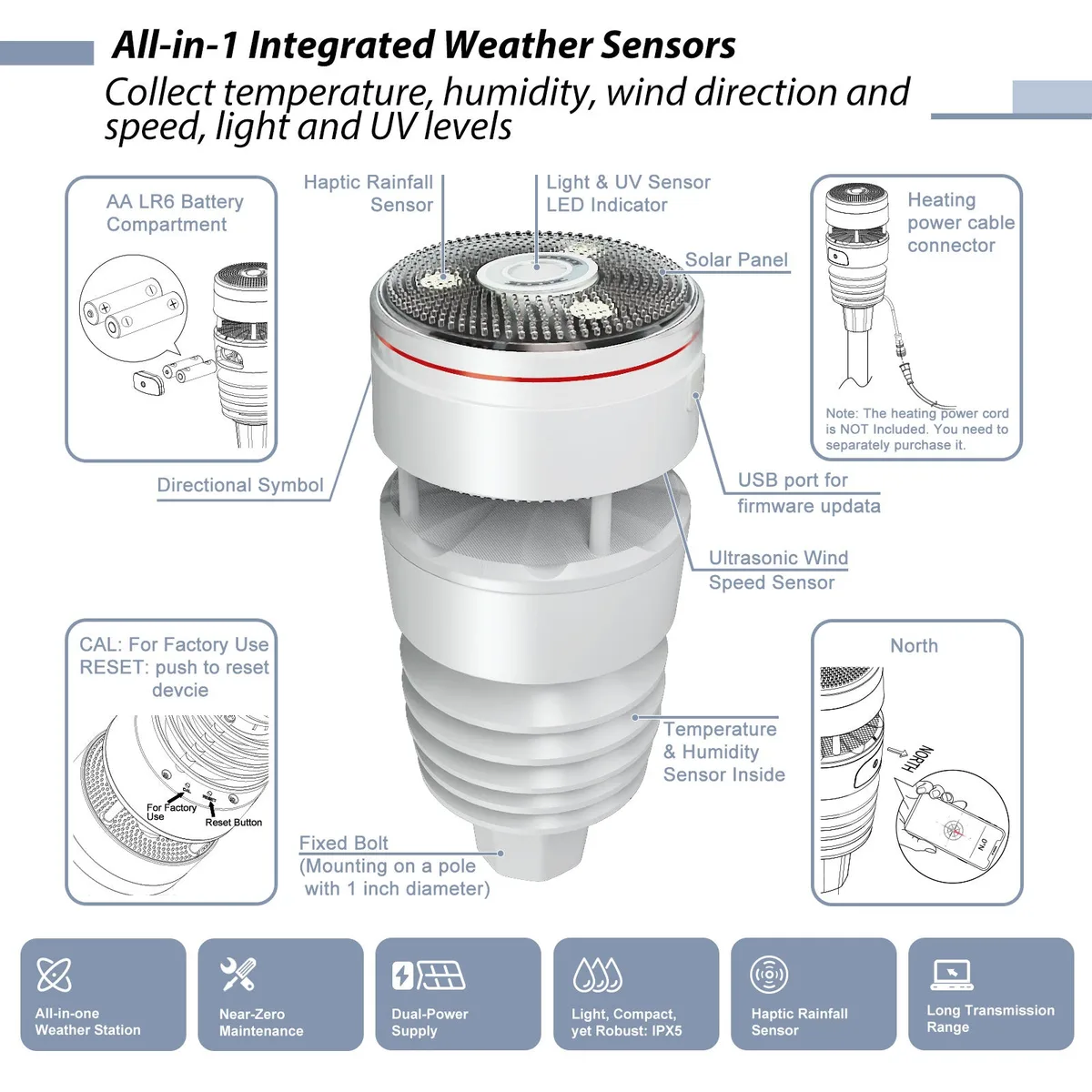 Ecowitt WS90 Ambient Weather
 Ecowitt vs Ambient Weather Stations: Which System Fits Your Setup?
Choose Ecowitt WS90 + a compatible gateway when you want modular expansion, gateway flexibility (including Ethernet on GW2000/GW3000-class hubs), and room to add sensors later. Choose Ambient WS-5000 when you want a more conventional complete station package with an included console, separated outdoor sensors, and a Wi-Fi cloud/app workflow. There is no universal winner — the better fit depends on modular vs console-first priorities.
Ecowitt WS90 Tempest Weather Ecowitt WS90 vs Tempest: Modular Sensor + Gateway vs All-in-One System
Choose WS90 for modular expansion and gateway flexibility; choose Tempest for a simpler complete system with built-in lightning. There is no universal winner — the better fit depends on whether you want an expandable Ecowitt stack or a complete retail Tempest package.
 Ambient Weather Ambient Weather
 Ambient WS-2902 vs WS-5000: Budget All-in-One vs Premium Separated Sensors
Choose WS-2902 for lower cost and simpler setup; choose WS-5000 for separated sensors, ultrasonic wind, and more flexible siting. There is no universal winner — the better Ambient fit depends on whether you want a simpler entry station or a premium separated-sensor package.
Tempest Weather 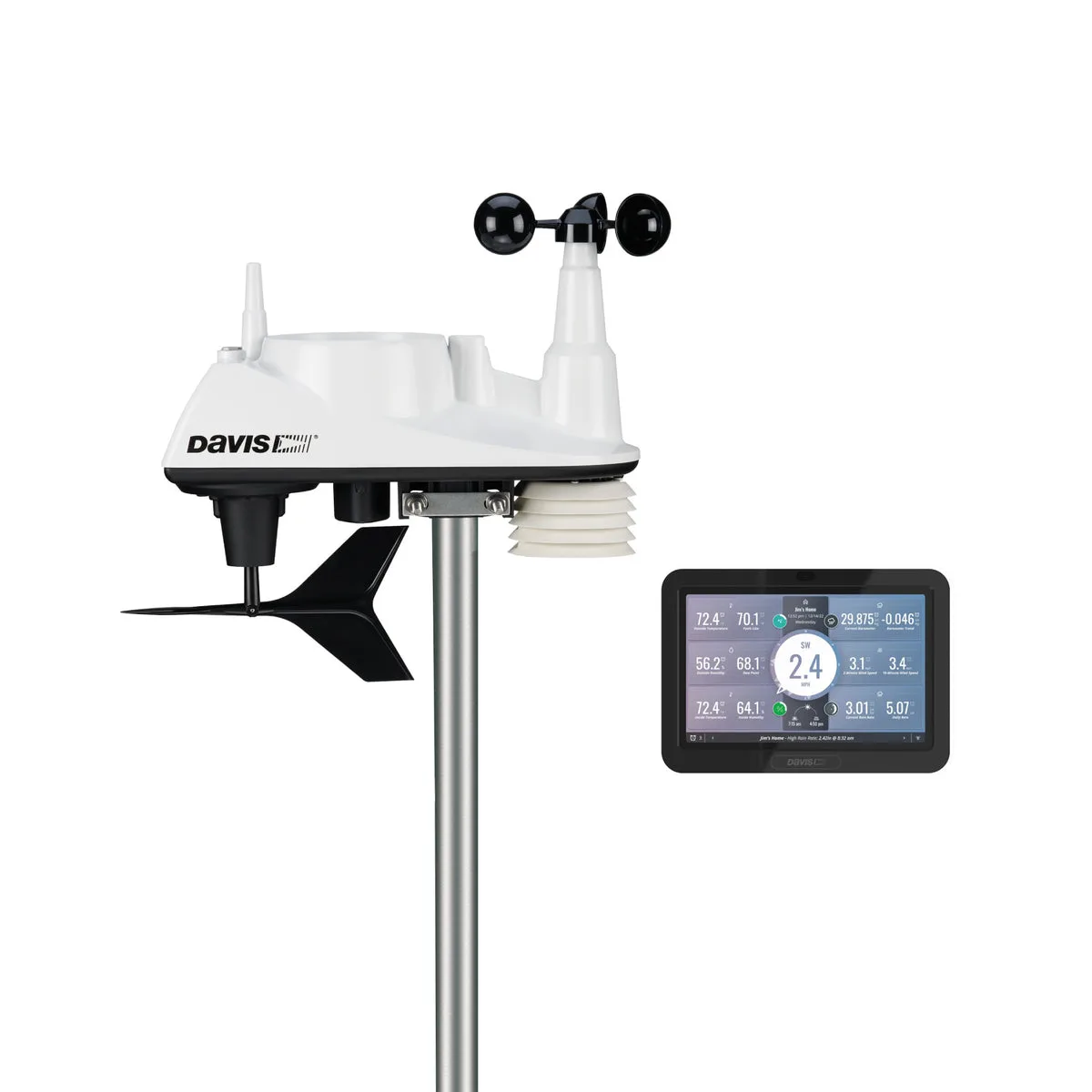 Davis Instruments
 Tempest vs Davis Vantage Vue: App-First Station or Research-Grade Console?
Choose Tempest for an app-first smart all-in-one with built-in lightning and an included Wi-Fi Hub. Choose Davis Vantage Vue 6242 for a more traditional/pro-grade integrated sensor suite with a WeatherLink Console path. There is no universal winner — and Atmosiva does not claim independent lab accuracy testing for either system.
Ecowitt WS90 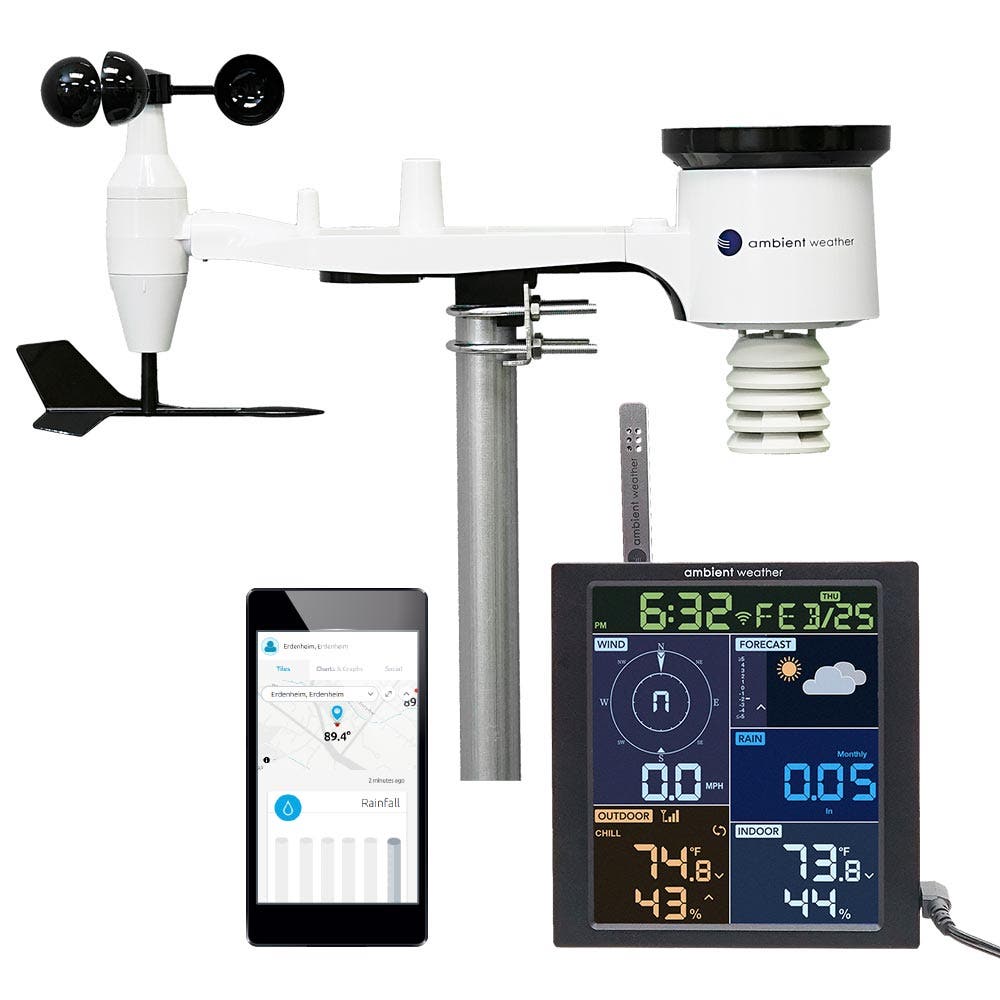 Ambient Weather
 Ecowitt WS90 + Gateway vs Ambient WS-1965: Which Home Assistant Weather Setup Fits?
For a Home Assistant buyer, Ecowitt WS90 plus a compatible gateway is the better fit when you want to choose the gateway and use a documented local-data path. Ambient WS-1965 is the better fit when you want one packaged station with a color console and Ambient Weather Network, and you do not need a documented Home Assistant or local-data path. Basic outdoor readings can come from either setup. There is no universal winner.
Ecowitt WS90 + Gateway Ambient WS-1965 Ecowitt WS90 vs Ambient WS-1965: Sensor + Gateway Setup or Console Station?
Compare the Ecowitt WS90 sensor plus a compatible gateway path against the packaged Ambient WS-1965 console station for Home Assistant fit, local-data options, expansion sensors, and setup simplicity.