
Quick answer
This guide answers: how should buyers choose between built-in and add-on lightning detection on personal weather stations? Hub overview: Extreme Weather.
It does not answer “which station is an official lightning warning system.” Consumer lightning features are awareness tools, not safety-grade emergency equipment.
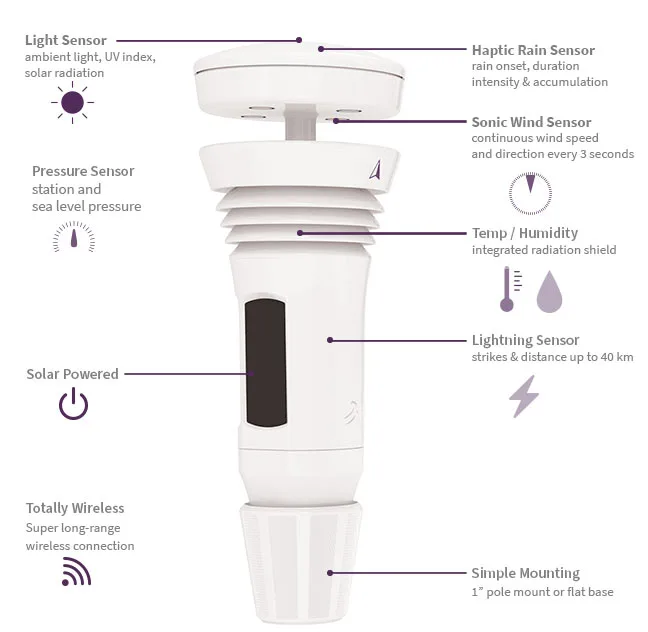
Best built-in lightning path: Tempest Weather System — all-in-one outdoor sensor + Wi‑Fi Hub with built-in lightning detection (proximity awareness; not official warnings).
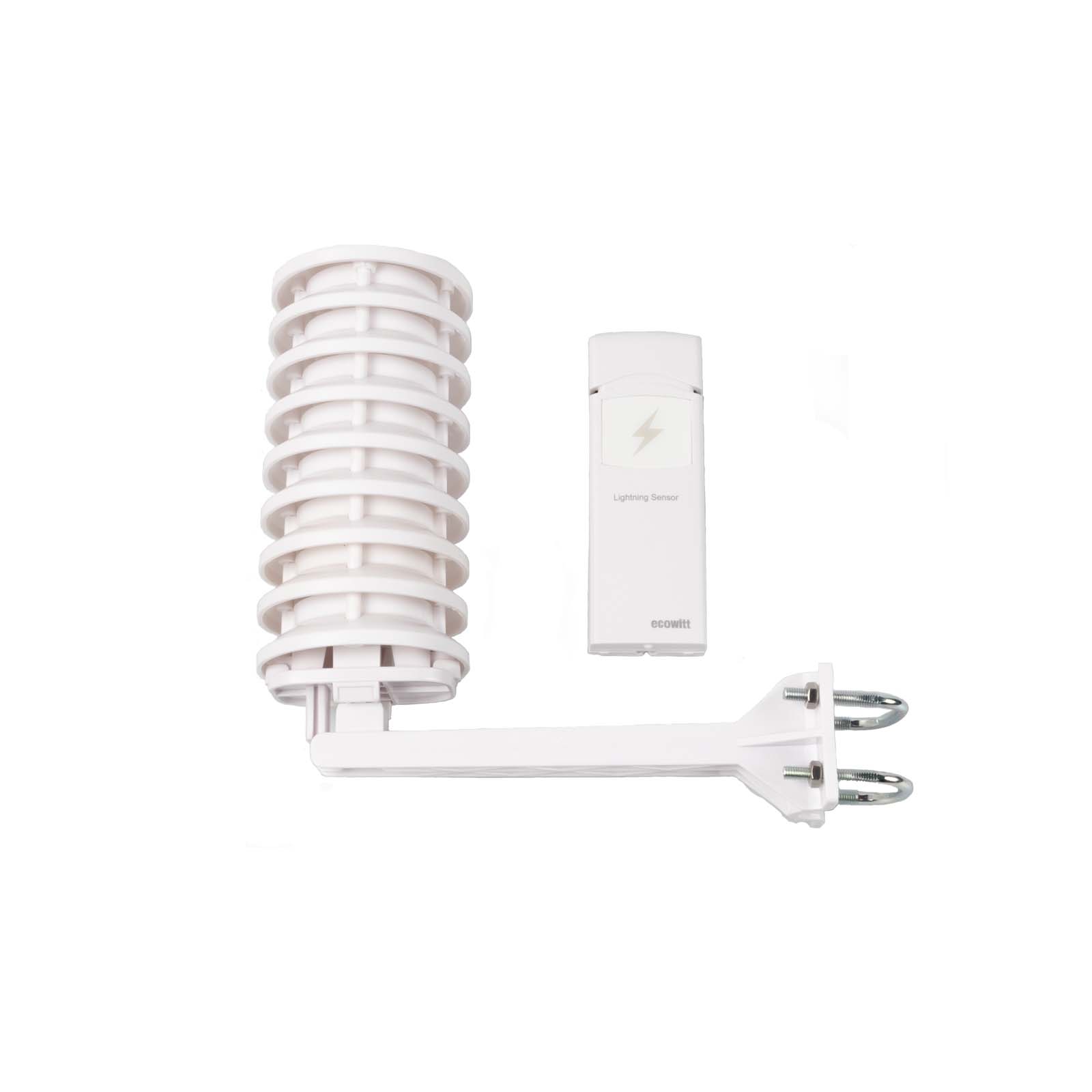
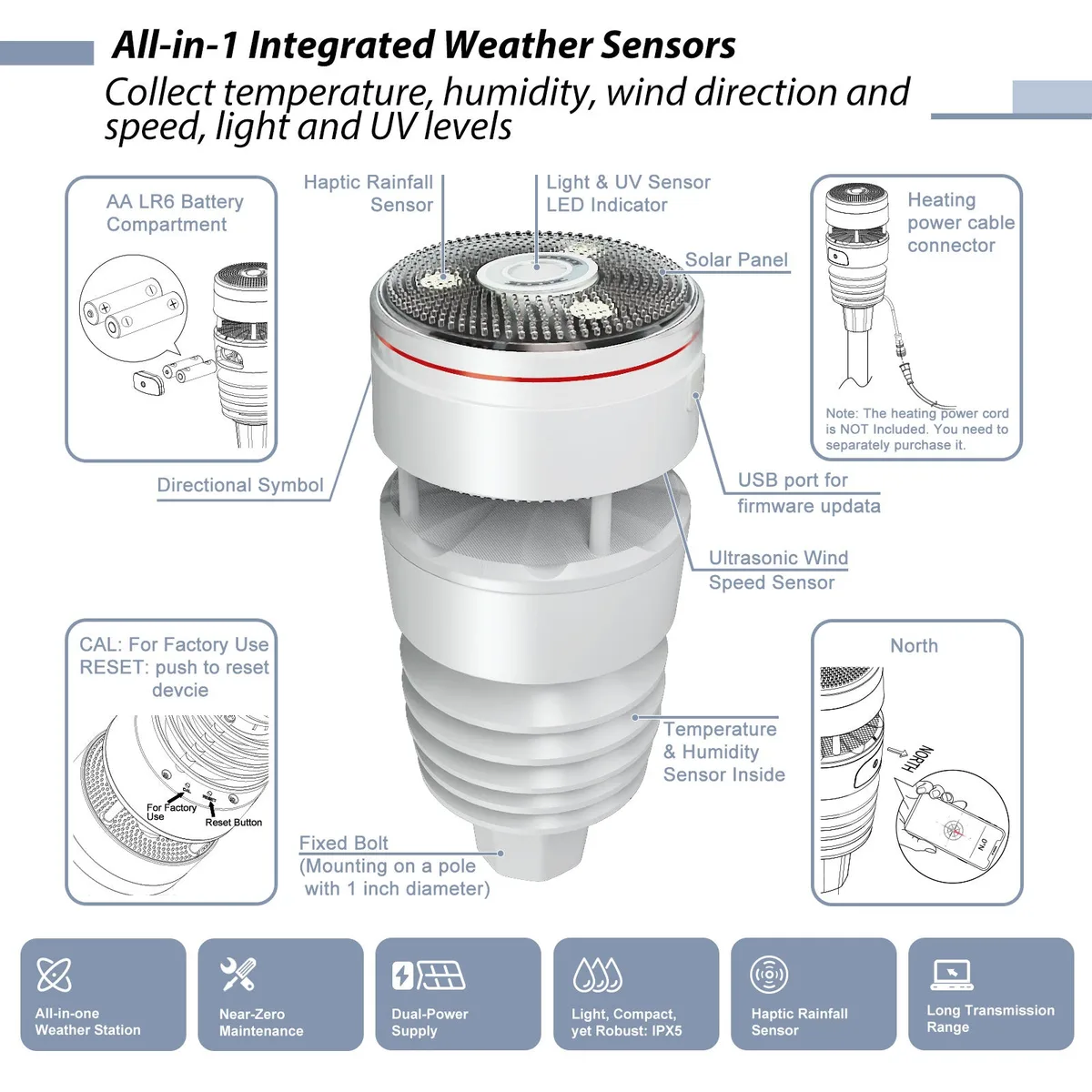
Best Ecowitt add-on path: Ecowitt WH57 — accessory-only lightning detector; requires a compatible Ecowitt gateway/console. Pairs naturally with WS90 + GW2000 / GW3000 setups.
Ambient add-on path: Ambient WH31L lightning detector (ASIN B08TGF71B3, verified US listing) for compatible Ambient consoles (for example WS-2000 / WS-5000 families where listed) — accessory, not built into the stock WS-5000 array.
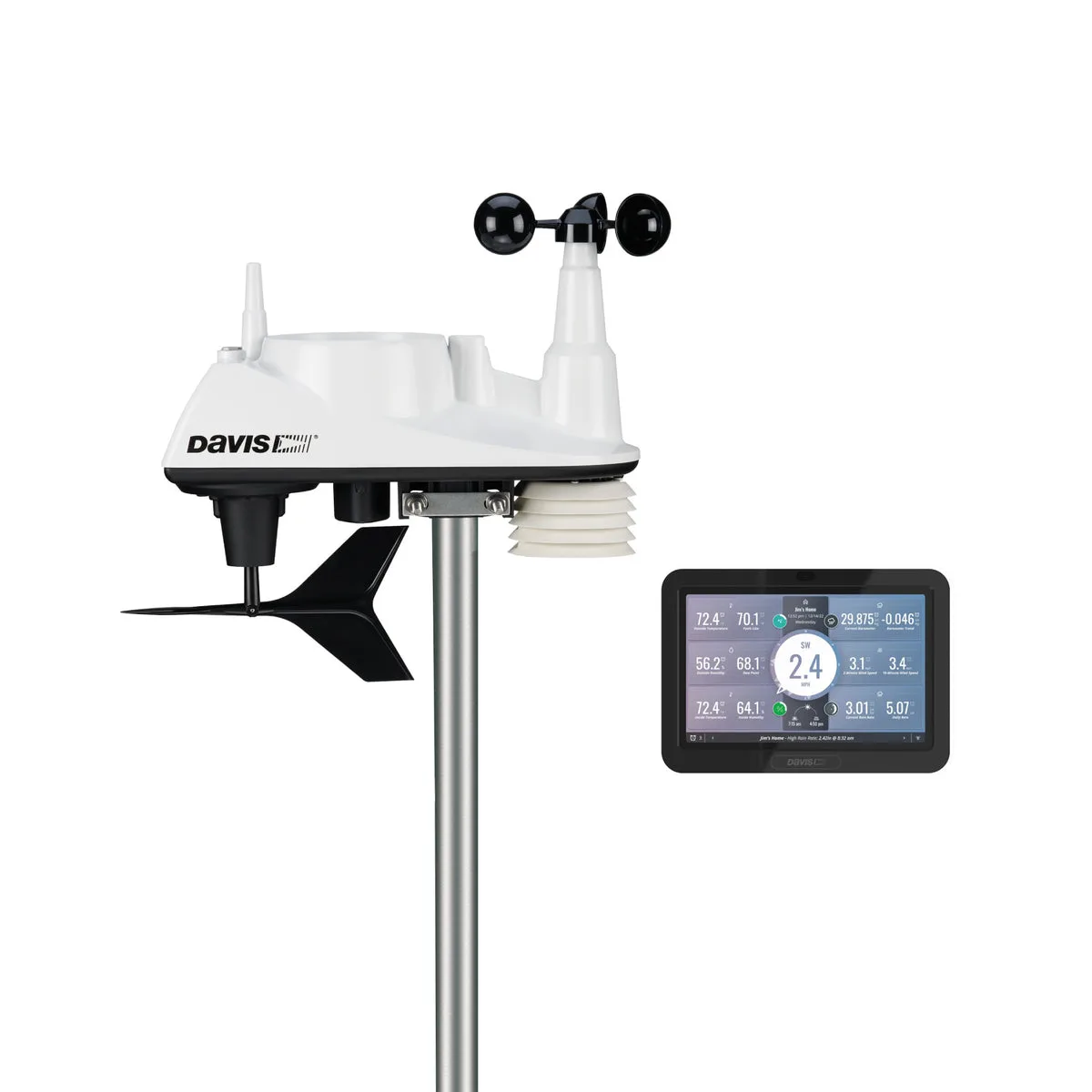
Davis note: Stock Vantage Vue 6242 does not include built-in lightning. Do not overclaim Davis lightning without verifying a third-party or additional hardware path for your exact setup.
Related comparisons: Tempest vs Ambient WS-5000, Tempest vs Davis Vantage Vue, Ecowitt vs Tempest.
Who this guide is for
- Buyers who want lightning proximity awareness alongside wind, rain, and pressure monitoring.
- Ecowitt users deciding whether to add WH57 to an existing gateway.
- Readers comparing Tempest’s built-in detector with Ambient or modular add-ons.
- Anyone who needs clear limits: monitoring ≠ official storm warning.
What lightning detection means
On consumer weather stations, “lightning detection” usually means the hardware reports nearby strike events and approximate distance/time where the manufacturer documents it.
It does not mean:
- Official National Weather Service alerts
- Evacuation or life-safety instructions
- Structural lightning protection for masts or buildings
- Hurricane-proof or storm-survival certification
Treat readings as local awareness while you still follow official warnings.
Built-in vs add-on
| Approach | What you buy | Best when |
|---|---|---|
| Built-in | Lightning hardware inside the outdoor station (Tempest) | You want lightning without a second outdoor module |
| Add-on sensor | Separate detector + compatible hub/console (WH57, WH31L) | You already run that brand’s gateway/console and want modular growth |
There is no universal “best overall” lightning station — fit the detection path to the ecosystem you actually own or plan to buy.
Options compared
| Option | Lightning type | Gateway/console needed? | Approx. documented range | Standalone station? | Best for |
|---|---|---|---|---|---|
| Tempest | Built-in | Wi‑Fi Hub included in retail system | ~25 miles / 40 km (WeatherFlow docs) | Yes (complete system) | App-first buyers wanting lightning included |
| WH57 | Add-on RF sensor | Yes — compatible Ecowitt gateway/console | ~0–25 miles / 0–40 km (Ecowitt) | No — accessory only | Ecowitt WS90 / GW2000 / GW3000 users |
| Ambient WH31L | Add-on | Compatible Ambient console (e.g. WS-2000 / WS-5000 families where listed) | Per Ambient listing/docs | No — accessory only | Ambient console owners adding lightning |
| Davis Vue 6242 | Not built-in on stock 6242 | WeatherLink Console path | N/A for stock lightning | Complete station without stock lightning | Davis buyers who do not need lightning in-box |
No hands-on lab ranking — this table is architecture and documented-spec comparison only.
Tempest built-in
Tempest is Atmosiva’s clearest built-in lightning complete system: outdoor all-in-one sensor, Wi‑Fi Hub, app viewing, and lightning proximity detection in the same outdoor unit.
Tradeoffs:
- No physical display console
- Fixed outdoor suite (less modular than Ecowitt add-ons)
- No Ethernet claim on the retail Hub
Compare console-led Ambient: Tempest vs Ambient WS-5000. Compare Davis console path: Tempest vs Davis.
Ecowitt WH57 add-on
The Ecowitt WH57 is an accessory-only lightning detector. It is not a weather station.
Requirements and notes:
- Compatible Ecowitt gateway/console required (GW1100 / GW1200 / GW2000 / GW3000-class and other listed hubs)
- US retail frequency is 915 MHz — must match your hub region
- No direct Wi‑Fi, Ethernet, MQTT, or Home Assistant on the sensor itself
- Pairs with WS90 outdoor arrays through the gateway
For modular vs all-in-one context, see Ecowitt vs Tempest.
Ambient WH31L path
Ambient’s WH31L lightning detector (ASIN B08TGF71B3, verified US listing at build time) is an add-on for compatible Ambient console stations such as WS-2000 / WS-5000 families where the listing documents support. Use Atmosiva product CTAs for tracked Amazon links when a product page exists; WH31L is guide-only in this batch.
Important:
- Not built into the stock WS-5000 outdoor array
- Console compatibility must match your exact Ambient model
- Still proximity/event monitoring — not official warnings
Atmosiva lists WH31L here as a guide mention with a verified Amazon ASIN CTA; it is not a separate Atmosiva product page in this batch.
Davis notes
Stock Davis Vantage Vue 6242 focuses on the integrated ISS + WeatherLink Console path without built-in lightning in the Atmosiva product positioning.
If you need lightning with Davis hardware, treat that as a separate research step (third-party or additional setup) — do not assume Vue 6242 includes it out of the box.
What range means
Manufacturer ranges such as ~25 miles / 40 km describe detection capability for nearby events. In real use:
- Terrain, interference, and sensitivity settings can affect reports
- Distant storms may or may not appear depending on conditions
- Range is not a safe outdoor activity radius
Use lightning data as extra context next to official alerts — especially during hurricane season or high-wind setups covered in the hurricane-season and high winds guides.
Buyer checklist
- Decide built-in (Tempest) vs add-on (WH57 / WH31L) based on the ecosystem you will actually run.
- Confirm gateway/console compatibility and RF region (915 MHz for US Ecowitt listings).
- Treat lightning as monitoring, not official emergency warning.
- Do not buy lightning features expecting hurricane-proof or safety-certified gear.
- Continue to related extreme-weather guides for wind, coastal, and continuity planning.
Related reading
Start at the Extreme Weather hub, then hurricane season, high winds, and the product pages for Tempest and WH57.