
Quick answer
This guide answers: what weather station should I consider for measuring strong winds? Hub overview: Extreme Weather.
It does not answer “what station is guaranteed to survive extreme winds.” Atmosiva has not field-tested gust survival or structural loads.
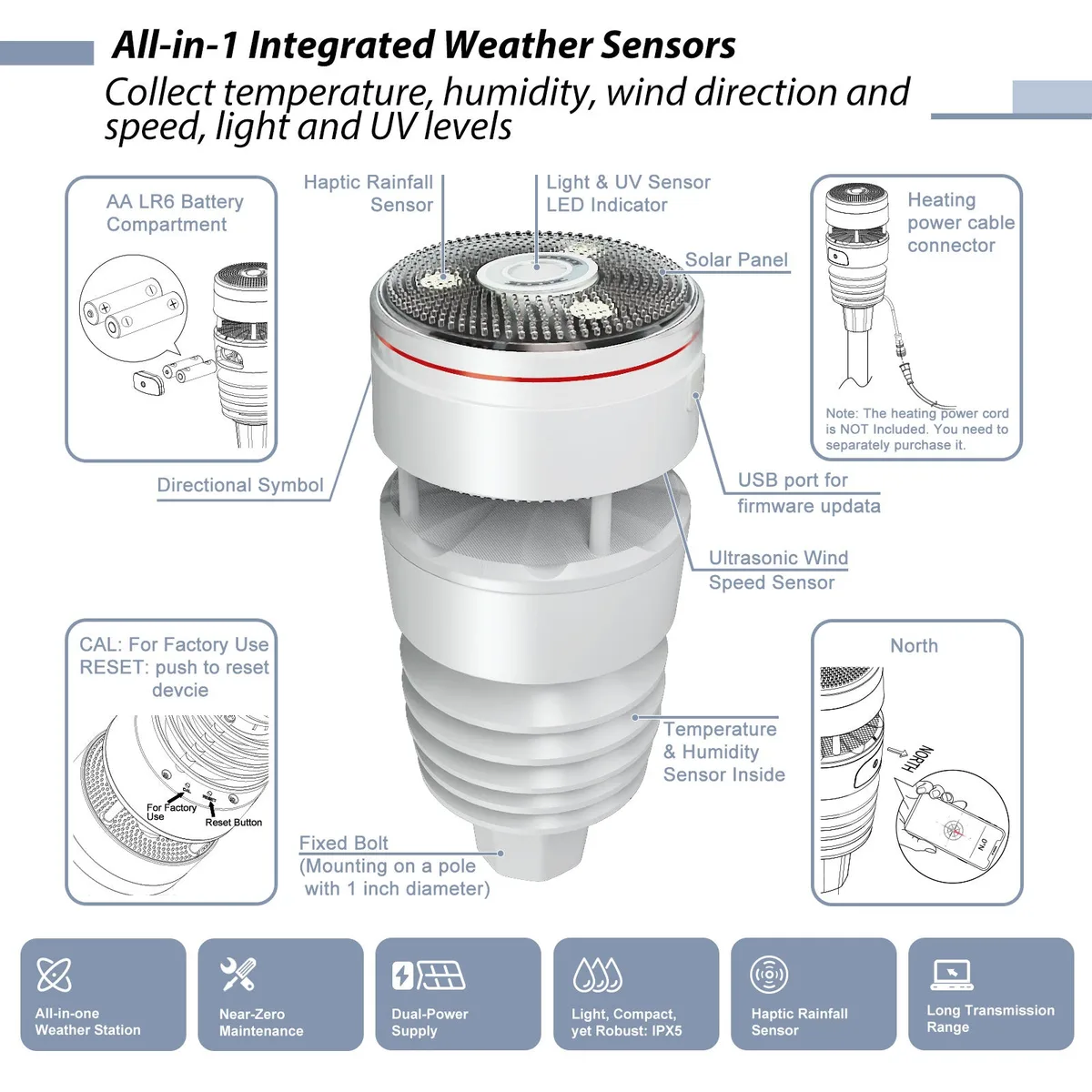
Best ultrasonic option: Ecowitt WS90 — ultrasonic wind, 0–40 m/s documented measurement range (not a survival rating); gateway required; no direct Wi‑Fi/Ethernet.
Best premium separated-sensor setup: Ambient WS-5000 — ultrasonic anemometer with separated outdoor sensors for dedicated mast siting; 0–89 m/s documented measurement range (not a survival rating).
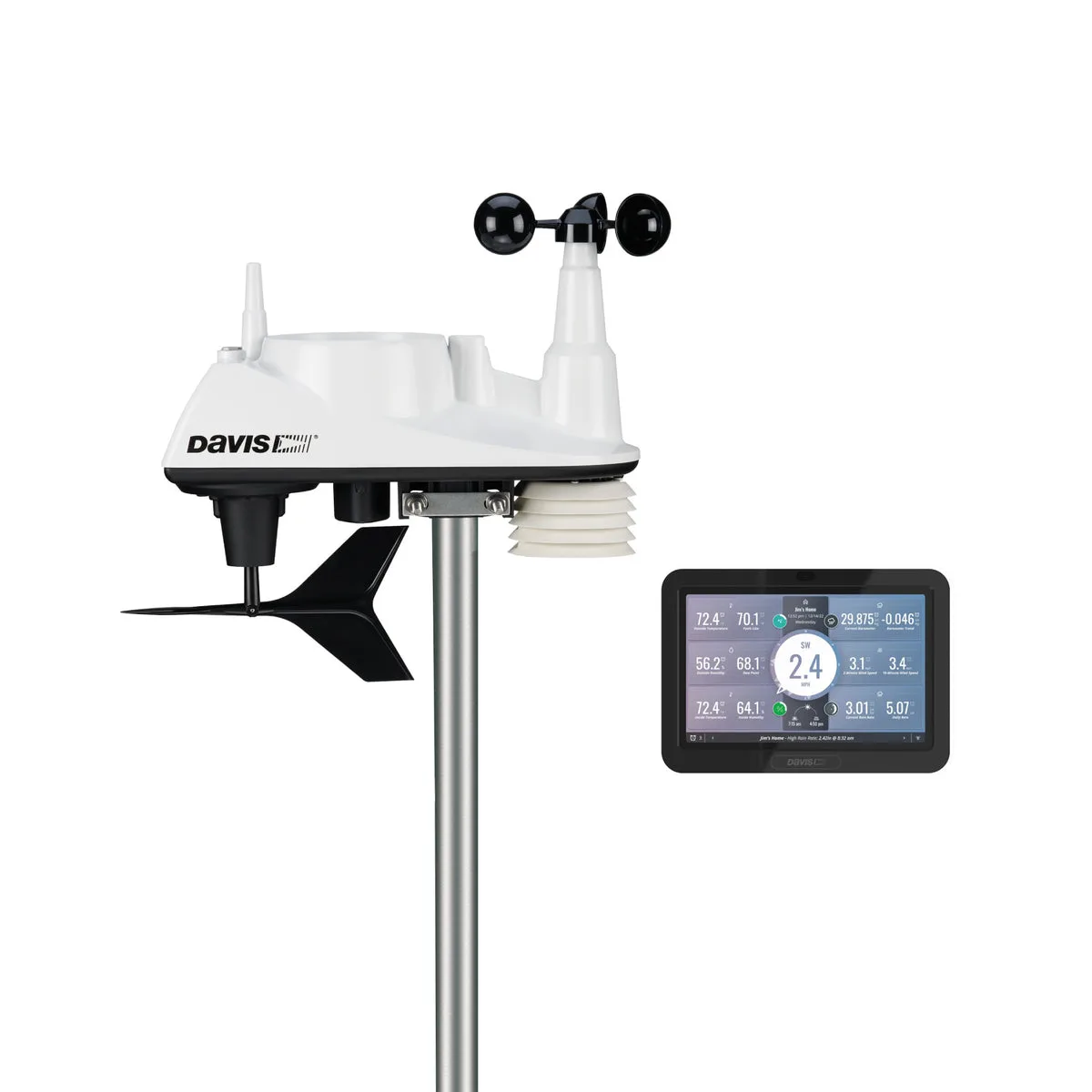
Best traditional / mechanical option: Davis Vantage Vue 6242 — cup anemometer with a high documented measurement upper bound (1–200 mph per Davis spec — not survival or mast rating).
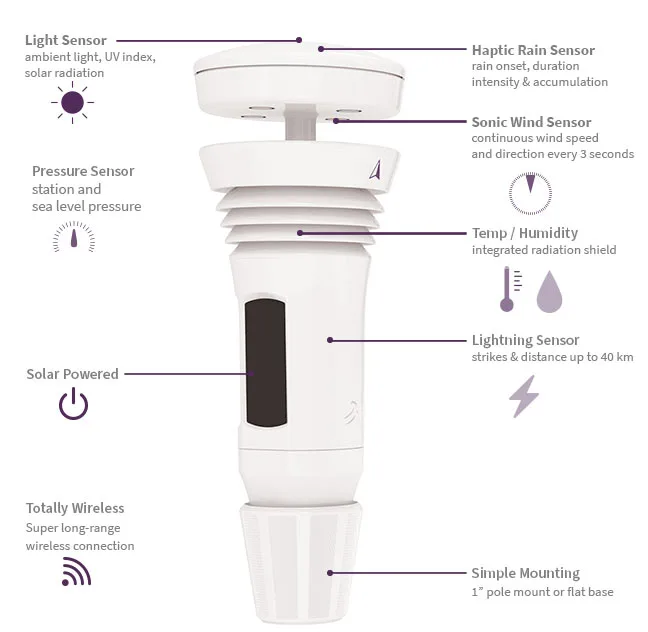
Best all-in-one smart option: Tempest — ultrasonic, 0–100 mph measurement range (not survival); included Wi‑Fi Hub; no Ethernet claim; mounting still matters.
Related: hurricane season, lightning detection, coastal, remote properties.
Who this guide is for
- Ridge-top, coastal, or open-plain homes focused on wind measurement quality and siting.
- Buyers comparing ultrasonic vs mechanical anemometers — also WS-2902 vs WS-5000.
- Readers who need clear limits: measurement capability ≠ storm survival.
Measurement range vs survival
A documented wind measurement range is not the same as:
- A survival rating
- A structural / mast rating
- Hurricane certification
- A guaranteed operating limit in a storm
When tables list m/s or mph figures below, treat them as manufacturer measurement specifications. Do not rank stations by raw “max wind” alone or treat those numbers as proof the hardware will remain installed through extreme events.
Ultrasonic vs mechanical
| Type | Buyer trade-off | Limitation |
|---|---|---|
| Ultrasonic | Fewer/no moving wind cups; can reduce mechanical wear points | Still needs a secure mast; not automatically more accurate or hurricane-resistant |
| Mechanical cups | Established design; long field history | Ice, debris, or wear can stop cups; service behavior differs by model |
| All-in-one array | Single outdoor install | Wind height often tied to one pole; less siting flexibility than separated sensors |
Ultrasonic does not automatically mean more durable, more accurate, or more storm-resistant than mechanical designs.
Stations compared
Note: “Documented measurement range” is not a survival rating.
| Product | Wind sensor type | Documented measurement range | Gateway / console | Mounting considerations | Best for |
|---|---|---|---|---|---|
| Ecowitt WS90 | Ultrasonic | 0–40 m/s (Ecowitt; not survival) | Compatible Ecowitt gateway required | Modular RF array; place on suitable mast | Ultrasonic + expandable Ecowitt stack |
| Ambient WS-5000 | Ultrasonic | 0–89 m/s (Ambient; not survival) | Wi‑Fi console included | Separated sensors — dedicated wind mast possible | Premium separated-sensor Ambient |
| Ambient WS-2902 | Mechanical cups | 0–100 mph (Ambient; measurement only) | Wi‑Fi console included | All-in-one array — less siting flexibility than WS-5000 | Turnkey mechanical Ambient (not equal to WS-5000 for high-wind siting) |
| Davis Vue 6242 | Mechanical cups | 1–200 mph anemometer spec (Davis; not survival / not mast rating) | WeatherLink Console (6242) | Integrated suite height constraints | Traditional Davis mechanical option |
| Tempest | Ultrasonic | 0–100 mph (WeatherFlow; not survival) | Included Wi‑Fi Hub (no Ethernet claim) | All-in-one — mast/base still required | All-in-one smart ultrasonic |
Compare Ambient tiers: WS-2902 vs WS-5000. Modular vs all-in-one: Ecowitt vs Tempest.
WS90 closed facts: ultrasonic; 0–40 m/s measurement (not the old 0–89 m/s / ±3% framing); gateway required; no direct Wi‑Fi/Ethernet.
Mounting considerations
- Prefer a rigid mast and minimize vibration where practical.
- Avoid mounting in strong roof turbulence when you can; follow manufacturer siting notes.
- Reference heights such as ~10 m / 33 ft are general meteorology guidance — most home installs must compromise.
- Guying and structure choices are local / manufacturer decisions — Atmosiva does not provide unsupported engineering load calculations.
- Consumer masts are not hurricane structural engineering.
Ethernet gateways can help storm-time data continuity when logging locally — Ethernet guide — but they do not make the outdoor array more wind-surviving.
Major-storm caution
Do not leave exposed weather equipment in dangerous conditions solely to capture peak wind if manufacturer guidance or local safety advice suggests lowering or removing it. Personal safety and official warnings come first. This is not emergency-preparedness advice — see the hurricane season guide for monitoring continuity topics.
Buyer checklist
- Decide ultrasonic vs mechanical for measurement and maintenance, not for “hurricane rating.”
- Prefer separated wind sensors (e.g. WS-5000) when mast height and fetch matter more than an all-in-one array.
- Read every wind figure as measurement range, not survival.
- Plan mounting with manufacturer siting notes and local structural judgment.
- Coastal salt or remote acreage — continue to coastal or remote properties.
Related reading
Start at the Extreme Weather hub, then hurricane, lightning detection (including optional WH57), coastal, or remote guides as needed.