


Quick answer
This guide answers: what weather station should I consider for a coastal or salt-air environment? Hub overview: Extreme Weather.
It does not answer “what station is corrosion-proof or salt-fog certified.” Atmosiva does not publish salt-fog lab results for any model.
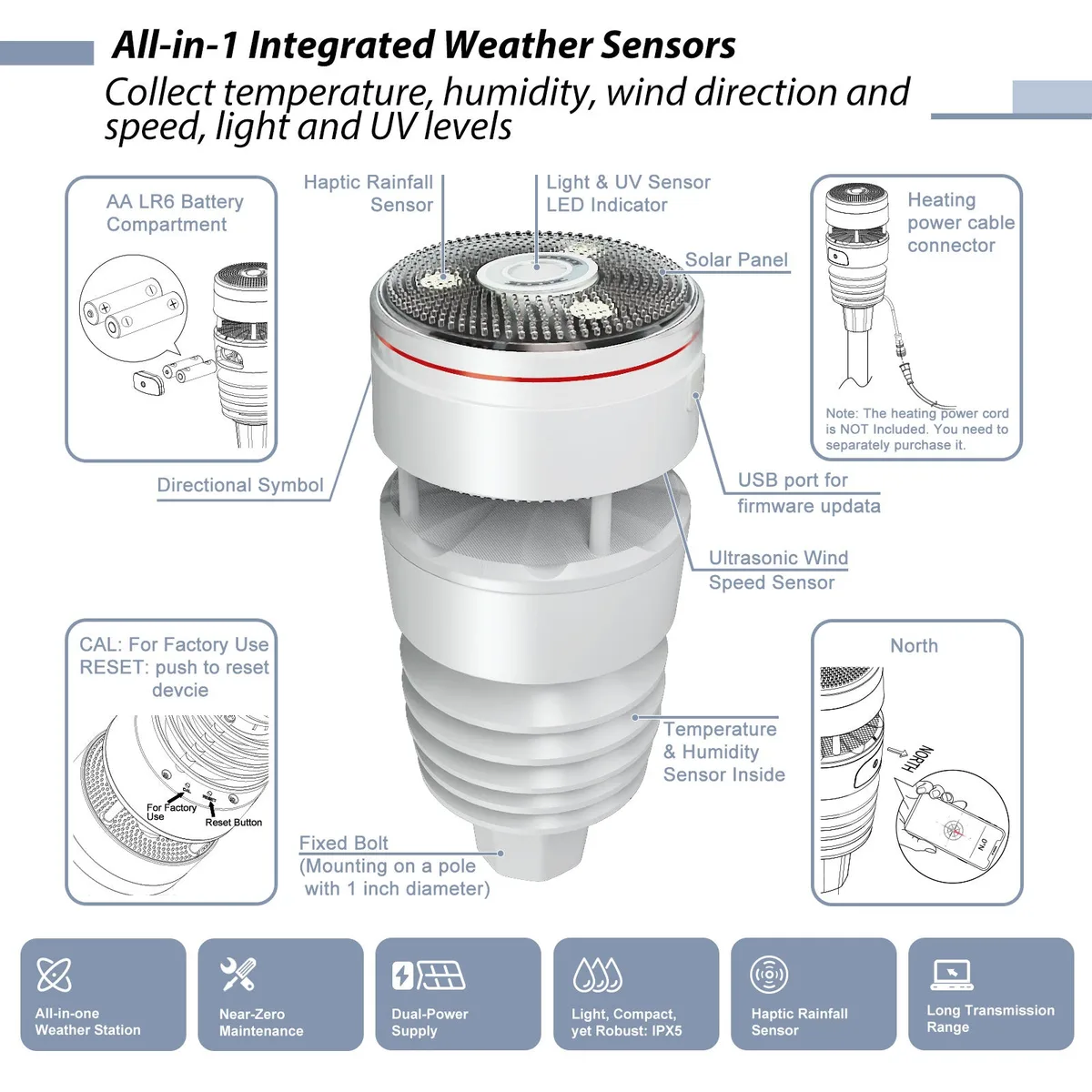
Best premium separated-sensor option: Ambient WS-5000 — ultrasonic wind, separated outdoor sensors for siting/serviceability, Wi‑Fi console (no standard Ethernet).
Best compact ultrasonic option: Ecowitt WS90 — ultrasonic outdoor array, 0–40 m/s documented wind measurement, gateway required, no direct Wi‑Fi/Ethernet; fewer moving wind parts — not coastal-certified or salt-proof.
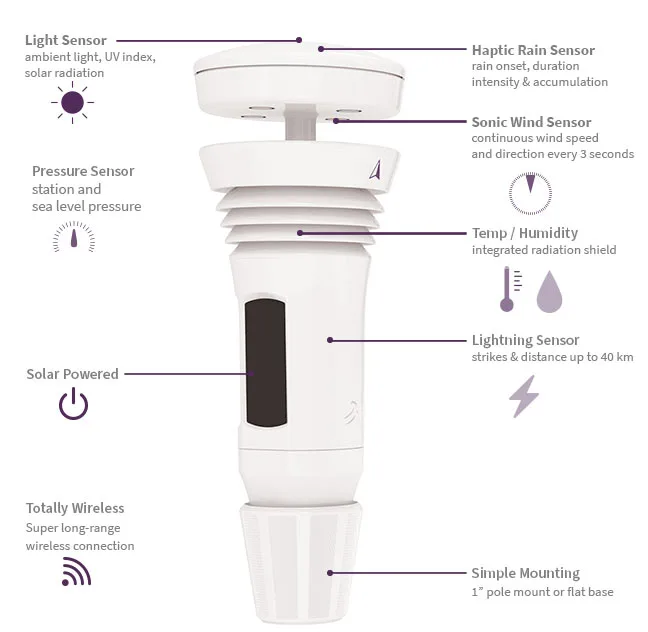
Best all-in-one smart option: Tempest — ultrasonic wind, built-in lightning, solar outdoor unit, included Wi‑Fi Hub; plan for maintenance access on an exposed all-in-one mount.
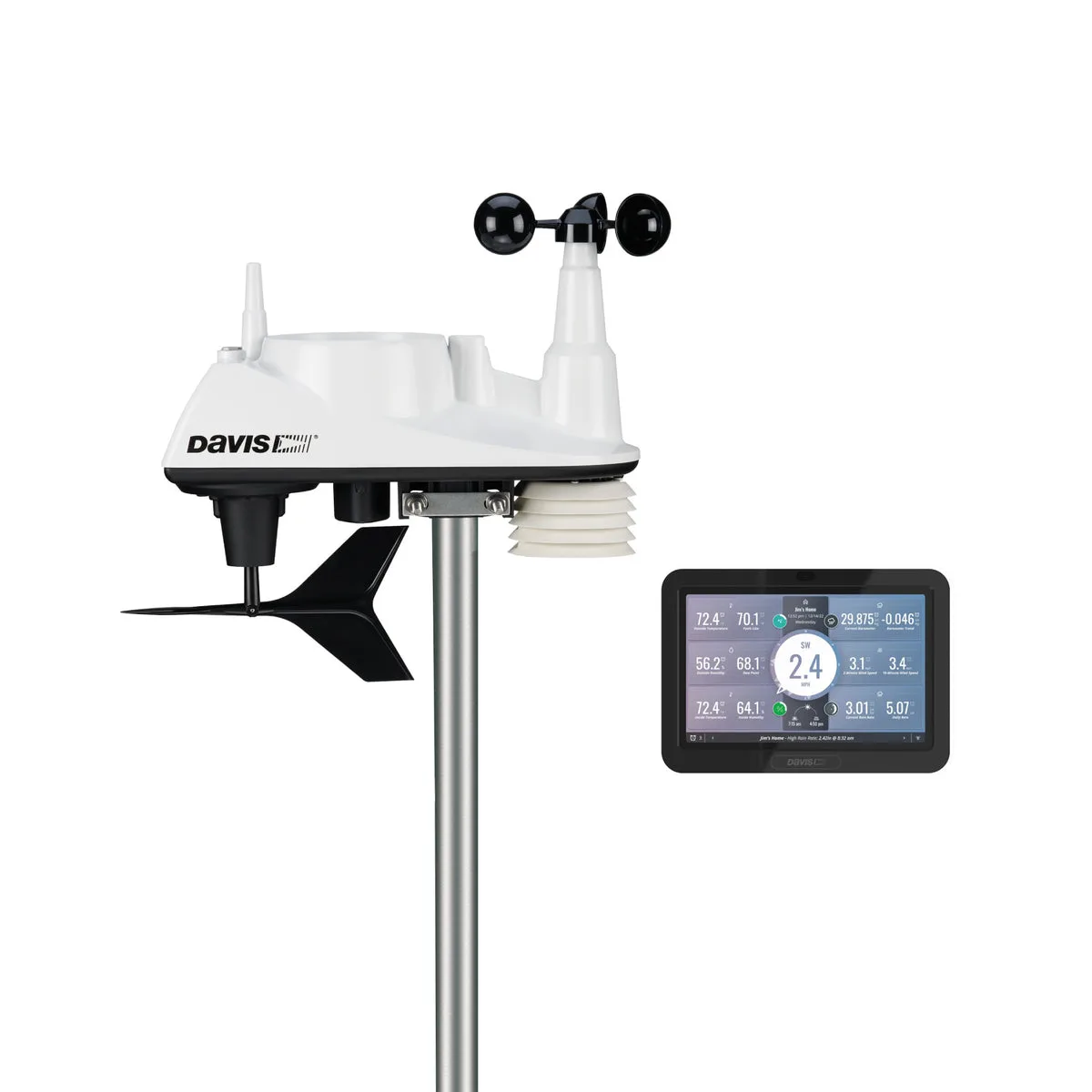
Best traditional station: Davis Vantage Vue 6242 — mechanical architecture with WeatherLink Console; established outdoor station — not salt-fog certified.
Related: high winds, hurricane season, remote properties.
Who this guide is for
- Oceanfront, bayfront, and near-shore homes dealing with salt air, onshore wind, and UV.
- Buyers who care about inspection access, mounting, and ongoing maintenance — not marine certifications.
- Readers comparing Ambient vs Ecowitt layouts — Ecowitt vs Ambient.
Coastal exposure realities
Coastal monitoring commonly prioritizes:
- Salt exposure and corrosion risk (maintenance, not certification)
- Wind and turbulent flow around roofs/walls
- UV / solar exposure on plastics and mounts
- Rain and humidity for local conditions
- Sensor accessibility for cleaning and fastener checks
Do not treat weather readings as a direct corrosion predictor. Prefer language like coastal exposure, salt-air environment, and inspect/clean hardware over marine-grade or rust-proof claims.
| Challenge | Practical buyer approach |
|---|---|
| Salt deposits | Inspect and clean where manufacturer guidance permits |
| Gusty / turbulent wind | Dedicated mast when possible — high winds |
| Horizontal rain | Keep rain sensors open to the sky; expect exposure effects |
| Hard-to-reach mounts | Prefer layouts you can service safely |
Stations compared
| Product | Wind sensor | Sensor layout | Console / gateway | Maintenance considerations | Coastal use caveat | Best for |
|---|---|---|---|---|---|---|
| Ambient WS-5000 | Ultrasonic | Separated sensors | Wi‑Fi console (no standard Ethernet) | Easier to service individual sensors | Not salt-fog certified | Premium separated-sensor coastal siting |
| Ecowitt WS90 | Ultrasonic (0–40 m/s measurement) | Compact outdoor array | Compatible gateway required | Fewer wind cups; gateway indoors | Not coastal-certified; no built-in lightning | Compact ultrasonic exposed-site sensor |
| Tempest | Ultrasonic | All-in-one | Included Wi‑Fi Hub (no Ethernet claim) | Whole unit exposed — plan access | Not corrosion-proof / salt-fog certified | All-in-one smart coastal monitoring |
| Davis Vue 6242 | Mechanical cups | Integrated suite | WeatherLink Console | Cups/vanes need inspection | Not salt-fog certified | Traditional mechanical station |
Ambient WS-2902 remains a simpler all-in-one mechanical option — less siting flexibility than WS-5000. Compare: WS-2902 vs WS-5000.
No corrosion-rating column — Atmosiva does not invent marine certifications.
Ultrasonic vs mechanical
- Ultrasonic: fewer moving wind parts — can reduce cup wear points in dusty or icing conditions.
- Mechanical: established cup/vane designs with long field history.
Ultrasonic does not automatically mean corrosion-resistant, more accurate, more hurricane-resistant, or salt-proof.
Coastal maintenance
Buyer-friendly habits:
- Inspect mounting hardware periodically
- Rinse/clean salt deposits where manufacturer guidance permits
- Check connectors and seals
- Inspect fasteners for corrosion or loosening
- Keep rain paths clear of debris
- Prefer installs you can reach safely for service
If you choose fasteners or coatings for a coastal mast, treat that as a local installation consideration — not a claim that the weather station itself is marine-grade or certified.
Mounting and siting
- Wind near roofs and walls can be turbulent — separated wind sensors help when you can place the anemometer more openly.
- Salt exposure can increase maintenance frequency.
- Easy access for inspection often matters as much as peak sensor height.
- Secure mounting remains important — follow manufacturer instructions and local safety/building judgment.
Atmosiva does not provide unsupported structural engineering prescriptions. Storm-season monitoring limits: hurricane season guide.
Buyer checklist
- Buy for coastal exposure and maintenance, not salt-proof marketing.
- Prefer separated sensors when you need wind height plus serviceable rain/temp modules.
- Confirm networking facts: WS-5000 = Wi‑Fi console; Tempest Hub = Wi‑Fi; WS90 Ethernet only via gateway; Davis Ethernet only with specific WeatherLink hardware when required.
- Plan an inspection schedule before summer humidity and tropical season peaks.
- Acreage RF or barn gateways — remote properties.
Related reading
Start at the Extreme Weather hub, then high winds, hurricane season, or remote guides as needed.