
Quick answer
This guide answers: what weather station is useful for hurricane-season monitoring? Hub overview: Extreme Weather.
It does not answer “what weather station will survive a hurricane.” Consumer stations are not certified hurricane-survival equipment.
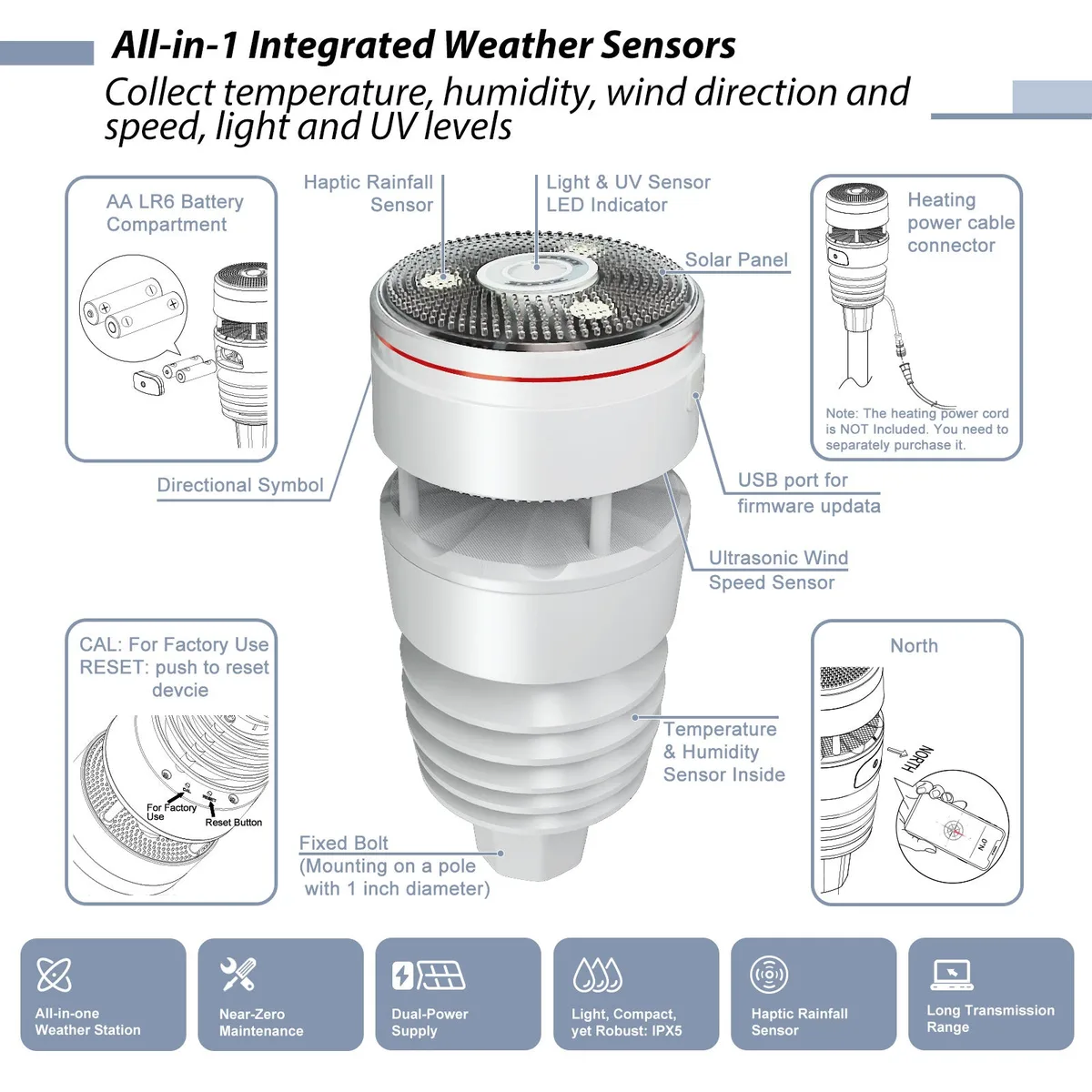
Best for local severe-weather monitoring: GW2001 / WS90 + Ecowitt gateway — ultrasonic wind (0–40 m/s measurement, not survival), haptic rain, strong local data paths when the gateway and LAN stay powered. See local data.
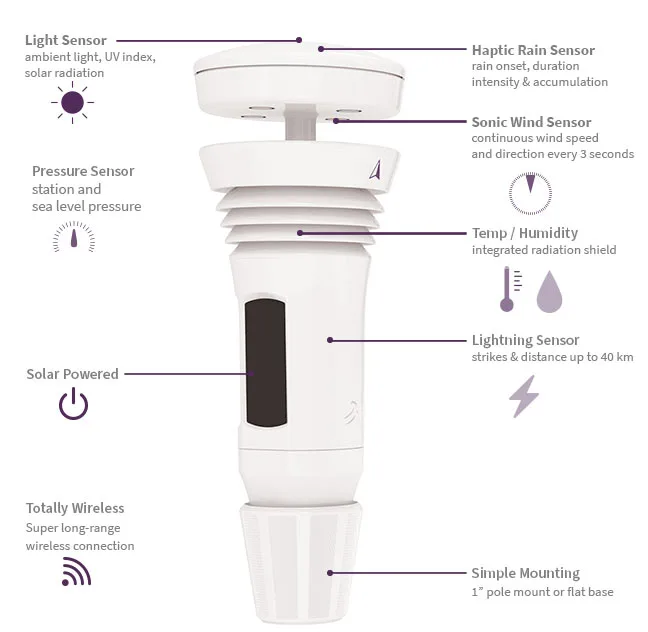
Best all-in-one with lightning: Tempest — ultrasonic wind (0–100 mph measurement, not survival), haptic rain, built-in lightning detection (not a safety-grade warning system), included Wi‑Fi Hub.
Best premium separated-sensor setup: Ambient WS-5000 — ultrasonic wind with separated sensors for siting; documented measurement capability only (e.g. 0–89 m/s in Ambient specs — not a survival guarantee).
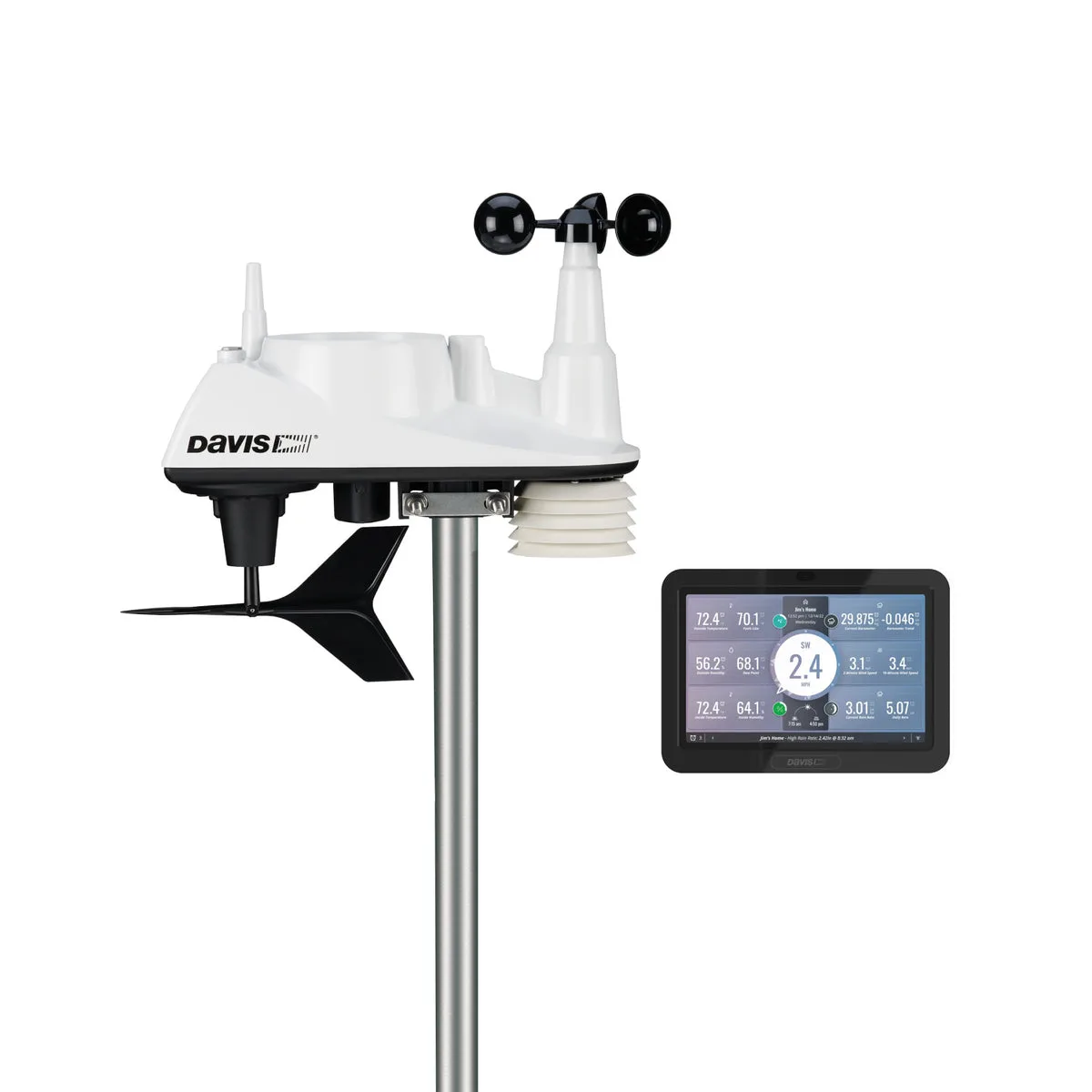
Best traditional mechanical option: Davis Vantage Vue 6242 — cup anemometer with a high documented measurement upper bound (not structural survival); WeatherLink Console for local/cloud viewing.
Related: high winds, lightning detection, coastal, remote properties.
Who this guide is for
- Gulf, Atlantic, and Caribbean homeowners who want property-level wind, rain, and pressure context during hurricane season.
- Buyers comparing continuity options when internet is unreliable — not storm-chasing hardware.
- Readers who need clear limits between monitoring and survival.
What this guide is not
Atmosiva does not claim any station is hurricane-proof, storm-proof, or guaranteed to survive eyewall conditions.
A personal weather station does not replace:
- National Weather Service alerts
- Official emergency warnings
- Evacuation instructions
This article is buying and monitoring guidance, not emergency-preparedness advice.
What to monitor
Useful hurricane-season monitoring usually includes:
- Wind — local gusts and sustained conditions (measurement only)
- Rainfall — property totals (not flood prediction)
- Pressure — when the station measures it
- Lightning — proximity awareness where documented
- Local continuity — what still works if the cloud drops
Do not rank hardware by maximum wind numbers alone — see high winds.
Stations compared
| Product / Setup | Wind sensor | Rain | Lightning | Local data | Power/network caveat | Best for |
|---|---|---|---|---|---|---|
| WS90 + gateway / GW2001 | Ultrasonic (0–40 m/s measurement) | Haptic/piezo | Optional WH57 via gateway | Strong gateway/LAN paths | Gateway + router need power | Local severe-weather monitoring |
| Ambient WS-5000 | Ultrasonic (measurement only) | Large funnel tipping | Accessory ecosystem | Cloud / advanced Custom Server | Console Wi‑Fi; console needs power | Premium separated-sensor Ambient |
| Davis Vue 6242 | Mechanical cups (measurement spec) | Tipping spoon | Accessory ecosystem | Console + optional WeatherLink Live | Console AC; WLL for some LAN UDP | Traditional Davis monitoring |
| Tempest | Ultrasonic (0–100 mph measurement) | Haptic | Built-in | Local UDP/WebSocket | Wi‑Fi Hub needs power; no Ethernet claim | All-in-one + lightning awareness |
No “survival” column — Atmosiva does not document manufacturer hurricane-survival ratings for these consumer kits.
Compare stacks: Ecowitt vs Tempest, WS-2902 vs WS-5000.
Wind measurement facts
Closed measurement figures (not survival ratings):
- WS90: 0–40 m/s measurement; gateway required; no direct Wi‑Fi/Ethernet
- Tempest: 0–100 mph measurement; Wi‑Fi Hub included
- WS-5000: documented Ambient measurement capability (e.g. 0–89 m/s) — not a survival guarantee
- Davis 6242: documented anemometer measurement upper bound (e.g. 1–200 mph per Davis) — not a structural mast or hurricane survival rating
Do not treat higher numbers as proof a station should remain installed through a major storm.
Rain in severe weather
Stations differ in rain hardware:
- Piezo / haptic (WS90, Tempest) — no tipping bucket mechanics
- Funnel / tipping (WS-5000 large funnel; Davis tipping spoon)
Severe wind and exposure can affect rain capture. Use readings for local rainfall awareness, not flood prediction. A manual gauge backup remains useful after extreme events.
Lightning detection
- Tempest: built-in lightning detection for proximity awareness
- WS90: no built-in lightning — optional Ecowitt WH57 via a compatible gateway
Lightning features are not safety-grade warning equipment and do not replace official alerts or proper lightning protection for structures/masts. Deeper buyer fit: lightning detection guide.
Power and network continuity
A solar-powered outdoor sensor is not a whole-system outage-proof setup.
| Layer | Continuity note |
|---|---|
| Outdoor sensor | Often solar + backup — may keep sensing briefly |
| Gateway / hub | Usually needs USB/AC or Hub power |
| Console | Usually AC |
| Router / LAN | Needs power for local apps and many automations |
| Internet | Cloud dashboards stop when ISP fails |
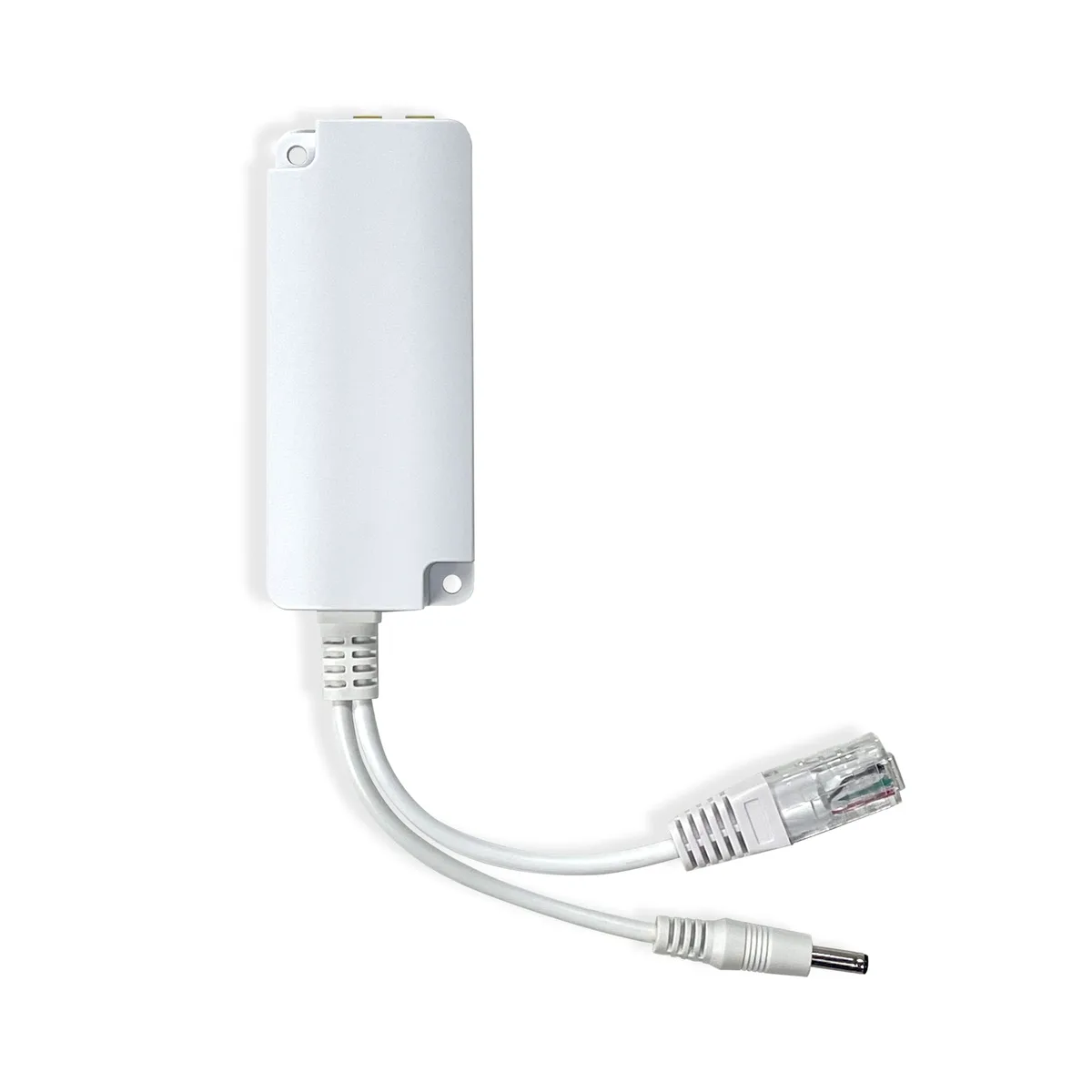
Local data helps only if the hub/gateway (and router, when required) remain powered. See local data and Ethernet for continuity design — without overpromising.
Mounting and storm caution
- Follow manufacturer siting; use a secure mast and minimize vibration where practical.
- Local building and safety considerations apply — Atmosiva does not provide unsupported structural engineering prescriptions.
Major-storm equipment caution: Do not leave exposed masts or sensors installed solely to capture peak winds if manufacturer or local safety guidance recommends lowering or removing equipment. Personal safety first. Do not storm-chase or make dangerous outdoor adjustments during active severe weather.
Buyer checklist
- Buy for hurricane-season monitoring, not hurricane survival claims.
- Prefer clear measurement specs and honest mounting plans — high winds guide.
- Plan UPS for gateway/console/router if local continuity matters.
- Treat lightning sensors as awareness tools only.
- Coastal salt exposure — coastal guide; acreage RF — remote properties.
Related reading
Start at the Extreme Weather hub, then high winds, coastal, or remote guides as needed.